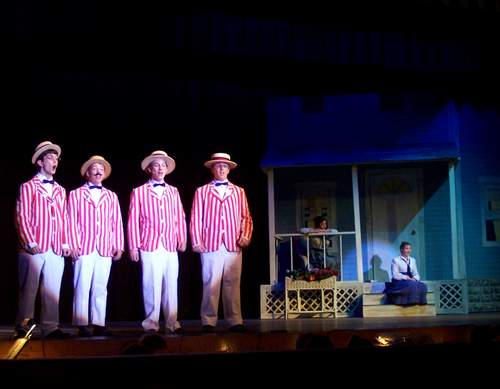
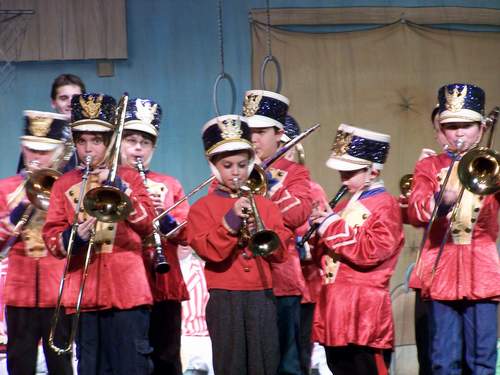
Increasing the Light

Everything in the universe is made of energy. What differentiates one form of energy from another is the speed at which it vibrates. For example, light vibrates at a very high frequency, and something like a rock vibrates at a lower frequency but a frequency nonetheless. Human beings also vibrate at different frequencies. Our thoughts and feelings can determine the frequency at which we vibrate, and our vibration goes out into the world and attracts to us energy moving at a similar frequency. This is one of the ways that we create our own reality, which is why we can cause a positive shift in our lives by raising our vibration.

We all know someone we think of as vibrant. Vibrant literally means “vibrating very rapidly.” The people who strike us as vibrant are vibrating at a high frequency, and they can inspire us as we work to raise our vibration. On the other hand, we all know people that are very negative or cynical. These people are vibrating at a lower frequency. They can also be an inspiration because they can show us where we don’t want to be vibrating and why. To discover where you are in terms of vibrancy, consider where you fall on a scale between the most pessimistic person you know and the most vibrant. This is not in order to pass judgment, but rather it is important to know where you are as you begin working to raise your frequency so that you can notice and appreciate your progress.

There are many ways to raise your vibration, from working with affirmations to visualizing enlightened entities during meditation. One of the most practical ways to raise your vibration is to consciously choose where you focus your attention. To understand how powerful this is, take five minutes to describe something you love unreservedly-a person, a movie, an experience. When your five minutes are up, you will noticeably feel more positive and even lighter. If you want to keep raising your vibration, you might want to commit to spending five minutes every day focusing on the good in your life. As you do this, you will train yourself to be more awake and alive. Over time, you will experience a permanent shift in your vibrancy.

Posted in Blogroll | Leave a comment

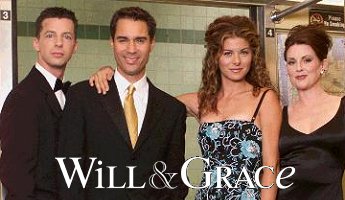
WILL & GRACE comes to an end

I can remember eagerly awaiting the premiere of the new sitcom, Will & Grace. I liked the show right off, but Jack and Karen were my least favorite characters. I figured they would be written out before long as they did not seem to fit to me. Karen seemed to serve no major purpose, and Jack was far too flamboyant for my taste.

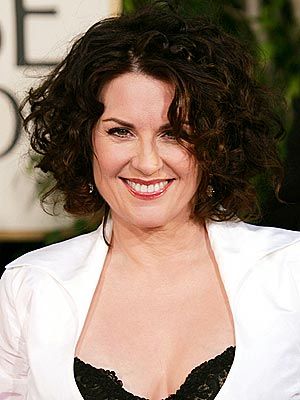
Before long, Karen was my favorite. Grace, played by Debra Messing, also became a favorite as she reminded me so much of Lucille Ball – especially with her success in physical comedy. But Karen! Megan Mullaly, whom I had seen on Broadway in Grease and How To Succeed In Business Without Even Trying, had a slight character adjustment from the semi-practical rich lady to the alcohol/drug abusing hit. I had several friends from college say, “You know, your sense of humor is so much like Karen Walker’s on Will & Grace.” I do not think myself as rude as Karen, but perhaps the wit. My friend, Debbie and I always called ourselves Karen and Jack – however, I was probably more like Will, as Jack has always been way over the top.

I will certainly miss the laughs, but thanks to my sister, I have several seasons on DVD! And at 11:00am on the WB station, the reruns continue each week day morning!

Reviews form WILL & GRACES’s final episode

Where there’s a Will, there’s a Grace. Until Thursday night, anyway, when their platonic love affair comes to an end.

The award-winning NBC sitcom Will & Grace is throwing itself a two-hour going-away party this week after eight seasons of gaiety, which, while not always groundbreaking, were always loaded with racy double entendres and sharp zingers.

While the series was lauded by GLAAD and publications like The Advocate for prominently featuring not just one, but two, out-and-proud main characters and accurately representing the gay community, Will & Grace mainly stuck to the formula–make ’em laugh.

Because it was a comedy–a pretty raunchy one at that, and it got even more so as the years went by–the show didn’t tackle too many polarizing issues besides ones that apparently are socially acceptable to make jokes about, such as infidelity, single motherhood and death.

But it did also address gay parenting, homophobia and what it’s like to be a member of a minority (if you’ve got oodles of money or rich friends) and in doing that became a groundbreaker.

The poignancy of Will & Grace when it began in 1998 (although it slowly oozed out of the series as the guest stars and cheaper laughs started pouring in) was that the two main male characters who were gay were far more comfortable in their own skin than the straight female lead could ever hope to be.

Sure, it doesn’t seem that risque but the openness of Eric McCormack’s Will and his best friend, Jack (Sean Hayes), may have been surprising to some viewers in the show’s early days. A gay man not trying to hide his sexual preference from someone? What?!

“Eight years ago, a show with two gay guys would have seemed niche,” McCormack told the Associated Press. “The opposite’s happened. Kids watch it, old women watch it. Everyone wanted to know when Will was getting a boyfriend.” (Not quite everyone–after losing its Friends in 2004, the show lost more than 50 percent of its viewership, which topped 17 million a few years ago. Season eight averaged 7.8 million viewers a week.)

And there lies the show’s cultural significance that led GLAAD President Neil Giuliano to issue this statement upon the series’ demise:

Will & Grace has given unprecedented visibility to gay, lesbian and bisexual people. This is a comedy that created an emotional connection between millions of viewers and its characters. Audiences laughed along with characters like Will and Jack, and a door opened for viewers to have a greater understanding of our lives. For many years to come, Will & Grace will continue to open hearts and minds as it lives on in syndication.”

Its further cultural significance, of course, was that the show won 12 Emmys, including one for Best Comedy and acting honors for McCormack, Debra Messing, Hayes and Megan Mullally.

Meanwhile, the series’ title may have been Will & Grace, but it was Hayes’ narcissistic struggling actor Jack McFarland and Mullally’s pill-popping socialite Karen Walker who sashayed and squeaked into viewers’ hearts.

Both supporting players won an Emmy, a Golden Globe and multiple SAG Awards for their roles as the voices of mad reason behind Will and Grace’s zany codependency.

A line from the series finale says it all:

Karen to Jack: “Do you find them exhausting?”

Jack: “I always have.”

After a one-hour retrospective at 8 p.m. Thursday, the season finale presumably will see that the characters are happy as they head into the annals of television.

“I can tell you that it’s funny and, as in the pilot, the episode is about the characters Will and Grace, with the characters of Jack and Karen there to support the Will and Grace story–which I think is the way to end the show,” Hayes said diplomatically, when Tribune Media Services asked him for hints about the show’s send-off. “Jack and Karen don’t need these incredible loose ends to be tied up, although we’ll give the fans some kind of closure for them as well.”

One can assume that the return of Harry Connick Jr. as Leo means Grace will tell her ex he’s the father of her baby and they’ll ride off into the sunset together. Will is about ready to set up house with boyfriend Vince (Bobby Cannavale, who won an Emmy for guest-acting on the show), so perhaps he’ll be able to stop acting mortally wounded whenever Grace experiences an instant of happiness. (Of course, the exact same thing can be said about her.)

As for Jack and Karen, well, put them anywhere with martinis in hand and people to make fun of and they’ll be just fine.

Mullally, 47, is set to host her own syndicated talk show in the fall, but the end of Will & Grace was enough to make even Karen shed a boozy tear.

“There were a lot of snotty, tearful faces all around the set,” Mullally told People recently. “When we got to the very, very last scene, everybody was just a mess. We started sobbing and hugging each other. That was it.”

McCormack, 43, who has starred in The Music Man on Broadway, is currently in New York rehearsing for his lead role in the dark-comedy play Some Girls, which opens June 8.

“My saddest moment was the last time I stood in Will’s kitchen,” he told People. “That was the most colorful position for me, standing there and stirring something. It was my pulpit, the place where I delivered my best jokes. Deb and Megan and Sean I can see again, but not my kitchen.”

Hayes, 35, has a few projects in the works at Hazy Mills Productions, the company he runs with busin
ess partner Tom Milliner.

“As sad as I am to leave, to not be able to see these people every day, I’m looking forward to other experiences in life that I haven’t had the opportunity to seek out yet,” Hayes said.

Messing may have gotten her fill of playing a pregnant woman this season, but she can’t wait to spend more time with her two-year-old son, Roman, now that she doesn’t have to say Grace every day. “Since the show wrapped, I’ve been able to just relax with him and go to Gymboree,” she told People.

In the end, no matter how many boundaries the show did or didn’t cross, there’s no arguing that Will, Grace, Jack and Karen were masters of both the one-liner and at taking care of each other.

“I think the humor of the program got people there and I think the relationship got people to stay,” the show’s cocreator, Max Mutchnik, told the AP. “In the case of Will & Grace it’s about friendship. Everybody wants that kind of relationship in their lives. Gay, straight, black or white–that’s second to it.”

…another review…

NEW YORK – It was a funny & satisfying conclusion for Will & Grace Thursday as the NBC sitcom ended its eight-season run by looking ahead more than 20 years.

“You know what’s funny? We haven’t changed a bit,” said a slightly grayer Will (Eric McCormack) to Grace (Debra Messing) and their pals Karen (Megan Mullally) and Jack (Sean Hayes), as they toasted themselves in a neighborhood Manhattan bar.

Go no further if you don’t want to know the details.

Bottom line: The gay guy and straight girl who were so much in love successfully navigated their incompatibilities, ending up bonded by marriage after all: Will’s son to Grace’s daughter.

At the start of the hour-long finale, Will (in the present) was making good on his pledge to care for pregnant Grace. He planned to help her raise the child.

But then Leo (Harry Connick, Jr.), Grace’s ex-husband, unexpectedly arrived from Rome to say he wanted her back — finding, much to his surprise, that she was pregnant with his child.

Flash forward two years: Grace and Leo and their little daughter, Lila, were together and happy.

Will and his partner, Vince (Bobby Cannavale), were together with Ben, their little boy.

But Will and Grace hadn’t spoken in two years. They were angry, feeling that somehow each had deserted the other.

Karen and Jack (as they shared a bubble bath and conversed on cell phones) fretted about this estrangement.

“Sometimes it seems like our sole purpose in life is just to serve Will and Grace,” Karen declared.

“Right,” Jack agreed indignantly. “It’s like all people see when they look at us are the supporting players on `The Will and Grace Show.'”

They plotted to bring the unsuspecting former best friends back together. The plan worked.

“I am so sorry I hurt you, Will,” Grace said. “But I’d be lying if I said I regret what happened. And I don’t think you do either.”

“God, you’re right,” said Will. “Grace, I don’t want to fight with you anymore.”

But despite their having made up, their lives — and respective families — took them on separate paths.

Then, some 18 years further into the future, college students Ben and Lila were moving into dorm rooms across the hall from one another. They met. Sparks flew. Their parents Will and Grace were reunited once more.

“I still can’t believe our kids are getting married,” Will told Grace as they chatted on the phone while they each watched TV, just as they did from the first episode of “Will & Grace” in 1998.

And what of Karen, the boozy, rich Manhattan diva, and Jack, her outrageously gay buddy?

We see them, also 20 years in the future, contentedly living together in luxury.

“Isn’t it funny how we’ve been with each other longer than we’ve been with any of our husbands or boyfriends?” chirped Karen. What’s more, Jack and Karen were caring for — and still trading barbs with — Rosario (Shelley Morrison), Karen’s wisecracking maid.

A sitcom about a gay man and a straight woman linked in every way but physically was a radical idea when Will & Grace premiered. But it quickly caught on and built into a hit, with nearly 200 episodes.

At its peak in the 2001-02 season the series drew an audience of more than 17 million, though its popularity tapered off in recent years (this season it has averaged 7.8 million viewers).

But even at the end, the characters were true to themselves, the affection between this Fab Four was palpable, and the banter remained razor-sharp.

On the phone, Will voiced his doubts about the dress Grace planned to wear to their kids’ nuptials.

“I’m not crazy about the trim,” he said.

“Will,” she shot back, “you never were.”


Thanks, Karen ~ for the memories…

and all the laughter…

Posted in Blogroll | Leave a comment

What If…

1. Who was the first person to look at a cow and say, I think I’ll squeeze these dangly things here and drink whatever comes out?

2. Who was the first person to say, See that chicken there? I’m gonna eat the next thing that comes outta it’s butt.

3. Why do toasters always have a setting that burns the toast to a horrible crisp, which no decent human being would eat?

4. Why is there a light in the fridge and not in the freezer?

5. If Jimmy cracks corn and no one cares, why is there a song about him?

6. Can a hearse carrying a corpse drive in the carpool lane?

7. If the professor on Gilligan’s Island can make a radio out of a coconut, why can’t he fix a hole in a boat?

8. Why do people point to the wrist when asking for the time, but don’t point to their crotch when they ask where the bathroom is?

9. Why does your OB-GYN leave the room when you get undressed if they are going to look up there anyway?

10. Why does Goofy stand erect while Pluto remains on all fours? They’re both dogs!

11. If Wile E. Coyote had enough money to buy all that ACME crap, why didn’t he just buy dinner?

12. If quizzes are quizzical, what are tests?

13. If corn oil is made from corn and vegetable oil is made from vegetables, then what is baby oil made from?

14. If electricity comes from electrons, does morality come from morons?

15. Is Disney World the only people trap operated by a mouse?

16. Why do the Alphabet song and Twinkle, Twinkle Little Star have the same tune?

17. Stop singing and read on . . .

18. Do illiterate people get the full effect of Alphabet soup?

19. Why do they call it an asteroid when it’s outside the hemisphere, but call it a hemorrhoid when it’s in your butt?

20. Did you ever notice that when you blow in a dog’s face, he gets mad at you, but when you take him on a car ride he sticks his head out the window?

Posted in Blogroll | Leave a comment

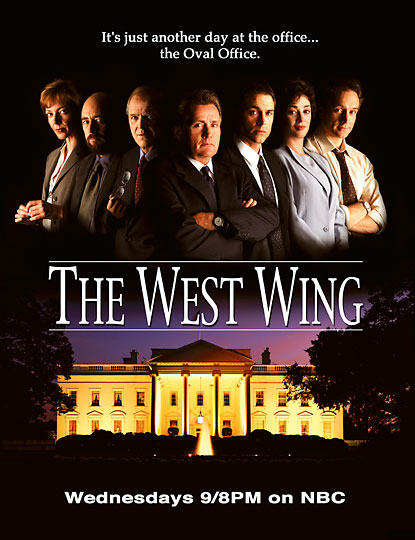
THE WEST WING comes to an end…


Sometimes the month of May is sad as so many things come to an end. The next few weeks I will be bidding farewell to fourteen private students, twelve of which I have known for ten years or more. Tonight, one of my all time favorite television programs came to an end.

For seven years I have been glued to the television screen each week – even during the re-runs, wishing each episode ran longer than its customary sitxy minutes. Many times, I would watch the video the following day, as so many of the episodes were so captivating. For two presidential elections, I wished that Josiah Barlett (played by Martin Sheen) was really on the ballot! Tonight I watched CJ Craig (Dayton’s own Alison Janney), President & Mrs. Bartlett (Mrs. – Sotckard Channing), Josh, and the others I have known for seven years, depart the White House. In Decemeber, one of my favorite actors, John Spencer who portrayed Leo McGarry, the president’s chief of staff, died of a heart attack.

OK – finally – in the last episode, there were things that really bothered me. I have always been critical of movies or television programs with inaccurate White House layouts, but THE WEST WING was always on top of the game, having evolved out of AN AMERICAN PRESIDENT. Tonight, however, inauguration day, was heaped with things that would not have happened.

First of all, Mrs. Barlett and the President discuss the weather for inauguration day, and she asks, “Who determined the changing of power should occur in the cold winter?” President Bartlett said, “Jefferson, Adams, Franklin…” Ugh! The traditional date, beginning with John Adams, was March 4th. It remained this date until Franklin Roosevelt moved it to January 20th.
The traditional parade, which lasts for 3-4 hours following the swearing in ceremony was over WAY too soon and the new First Lady sends a reminder to President Santos that it is 6:00PM and they needed to prepare for the balls. Generally, the parade is still continuing until after 6:00PM, and the balls do not begin until after 9:00PM. Plus, the day was still very light. In January at 6:00PM?

As CJ Craig was leaving the White House, she strolled in front of the White House where people, mostly sight-seers were strolling casually along Pennsylvania Avenue. There was no reviewing stand for the parade (which ended way too soon!) and it is Washington, DC during the inauguration – there would have been no way you could move in the city due to the excessive crowds – and especially not in front of the White House.

Normally, I am more forgiving, but this show has always displayed such tremendous attention to detail, and tonight was such a let down. Very disappointing last episode.

Still, I must say this was still the only television show which has held me captive for seven years.

Here are a few write ups…

NEW YORK – It was an orderly transition Sunday night as President Jed Bartlet left office and “The West Wing” came to a graceful end.

After seven TV seasons (and two terms in his fictional White House), the heroic, quirky, often embattled chief executive played by Martin Sheen was succeeded by Matt Santos (Jimmy Smits). As the Bartlet administration came to its inevitable conclusion, so did the NBC drama.

“You did a lot of good, Jed, a lot of good,” the First Lady (Stockard Channing) told her husband as Inauguration Day dawned.

Bartlet’s mood at that moment must have matched many viewers’: relief, satisfaction, gratitude and sadness that it was about to be over.

And later on, Abbie Bartlet said proudly, “Jed, you made it. You’re still here” — after the assassination attempt, his battle with multiple sclerosis, and the punishing duties of his job.

Sentiment hung heavy through the hour, both for the characters and the audience. In particular, former chief of staff Leo McGarry, who had died suddenly on the campaign trail as Santos’ vice-presidential running mate, was repeatedly recalled (as was, implicitly, the late John Spencer, who played him until his death of a heart attack last December).

“I’m gonna take one final stroll around the joint, to make sure nobody’s making off with the cutlery,” Bartlet told his secretary (Lily Tomlin) after tending to one final presidential task: signing some pardons in the oval office.

Caution: Spoiler alert. Would he pardon Toby Ziegler (Richard Schiff), a trusted senior adviser who had leaked classified information out of conscience, then confessed; been fired, tried and indicted; and now was facing prison?

Though still torn between feelings of betrayal and affection — well, of course, Bartlet pardoned Toby.

For the episode, a full-scale inauguration platform was erected, where the ceremony would soon begin as, back at the White House, Bartlet staffers watched coverage of it on their TVs and finished packing up.

Then, at 42 minutes into the hour, Santos took the oath of office. An era was over. So, remarkably, was the brief inauguration scene.

“Nice speech,” the former president told President Santos (viewers will never know).

“No JFK,” Santos replied.

“No,” smiled Bartlet. “But you’ve got time. Make me proud, Mr. President.”

“I’ll do my best, Mr. President,” Santos said.

And Bartlet was gone.

In the unseen Santos administration ahead, “West Wing” favorites Donna Moss and Josh Lyman (Janel Moloney and Bradley Whitford) will be part of the team — and presumably will remain an item, a recent development after having been partners for years in TV’s sexiest unconsummated, unacknowledged romance.

“The West Wing,” which premiered in fall 1999, was the vision of Aaron Sorkin, whose genius was reflected in the pilot episode, repeated Sunday night just before the finale aired. Sorkin not only created the series, but wrote all the episodes for several seasons before leaving it.

Although a popular hit as well as a critical smash, the series in recent seasons dropped precipitously from its former Top-10 status and was canceled by the network.

Even so, this season’s episodes have been strong, charting not only White House goings-on but also the campaign between Santos and his Republican challenger, Arnold Vinick (Alan Alda).

Viewers can be cheered that Sorkin will be back on TV: NBC has announced that his new series, “Studio 60 on Sunset Strip” will be on its fall lineup, with stars including “West Wing” alumni Whitford and Timothy Busfield.

And Sunday the final scene of “The West Wing” left the audience on a forward-looking note, too, even if expressed in a wistful tone.

“What are you thinking about?” Abbie Bartlet asked her husband as they flew back home to New Hampshire after the marvelous adventure they had shared with “West Wing” fans.

“Tomorrow,” he replied.

It’s the little things that doom a presidency: the Depression; Watergate; Aaron Buerge proposing to Helene Eksterowicz.

The West Wing leaves office Sunday night having survived 154 episodes, seven seasons, cast and crew departures and the death of a beloved costar, but never having recovered from The Bachelor.

Once a Top 10 hit, the Oval Office drama faltered four seasons ago, when it was up against ABC’s then-new, then-hot matrimonial-minded franchise. In one year, viewership fell 22 percent. And it never got back up. This season, the show was about as popular as such quickly forgotten series as The Book of Daniel and Threshold.

Sunday’s finale, airing at 8 p.m. (ET/PT) on NBC, looks forward to a new administration that audiences will never see, barring a reunion movie or series sequel. Titled “Tomorrow,” the episode takes place on Inauguration Day–Congressman Matt Santos (Jimmy Smits) is moving into the West Wing; President Josiah Bartlet (Martin Sheen) is moving out.

In real life, Sheen is moving onto Ireland and undergrad studies; among his costars, Bradley Whitford is moving onto West Wing creator Aaron Sorkin’s new Saturday Night Live-inspired series, Studio 60 on the Sunset Strip, starring Matthew Perry.

Borrowing from Will & Grace, The West Wing has loaded up on guest stars, or at least distinguished alumni, in its final days. Mary-Louise Parker, Marlee Matlin and Tim Matheson were among those who reprised their recurring roles in recent weeks. Rob Lowe, who left the show in 2003 after squabbling over his role and his paycheck, returns Sunday for a cameo as Sam Seaborn, Bartlet’s former spin doctor.

Like the real Washington, D.C., the fake Washington, D.C., of The West Wing relied on a large, revolving crew of steady pros, not flashy stars, to get its business done. Since things tend to run smoother if the president sticks around, Sheen stuck around for the full run, his character having staved off several international crises, not to mention a 2002 campaign challenge from Barbra Streisand’s better half.

Key West Wing staffers Whitford (as Josh Lyman), Janel Moloney (as Donna Moss), Allison Janney (as C.J. Cregg), Richard Schiff (as Toby Ziegler) and Dulé Hill (as Charlie Young) also remained loyal to the cause. Stockard Channing, as Bartlet’s wife Abigail and the nation’s first lady, appeared in more than 50 episodes from 1999 through Sunday.

John Spencer was a West Wing lifer, too, his battle-tested Leo McGarry, Bartlet’s confidante and former chief of staff, was a linchpin of the show and a key player in this past season’s election storyline (his character was Smits’ running mate). When he died last Dec. 16 from a heart attack, it seemed a final, fatal blow to a series already listing. NBC announced West Wing’s cancellation a month later, although the network said the pink slip was being written prior to the actor’s death.

As far as Bartlet and company were concerned, McGarry lived on until April, when he died (off screen) on election night–something that would be called a neat dramatic twist had it not been necessitated by a real-life tragedy.

Spencer’s death was the gravest of The West Wing off-screen dramas, which included the Lowe falling out, the 2001 salary holdouts of Janney, Schiff, Spencer and Whitford, the 2003 exits of Sorkin and director Thomas Schlamme, and most recently, the reputed pay demands of unnamed “key castmembers” over a planned retrospective special.

NBC defused the last one by pulling the plug on the retrospective, once slated to air before the finale. In its place, at 7 p.m. (ET/PM) Sunday, the network will rerun the show’s inaugural episode, originally broadcast Sept. 22, 1999.

Through it all, The West Wing won Emmys, lots of Emmys–24 for the series, including four for Outstanding Drama, four for Janney and one trophy each for Channing, Spencer and Whitford. Its haul puts it sixth on the all-time series wins list behind Frasier (37 Emmys), The Mary Tyler Moore Show (29), Cheers (28), Hill Street Blues (26) and The Carol Burnett Show (25). It’s possible it could claim even more glory at this coming fall’s Emmys–nominations are announced in July.

As a TV president, Sheen outlasted the likes of Geena Davis (of the one-and-done Commander in Chief), Patty Duke (of the one-and-done Hail to the Chief) and the marked chief executives of 24.

Perhaps if Aaron and Helene hadn’t looked so in love, The West Wing would still be flying high–and Sheen would be lobbying for an end run around term limits.

Posted in Blogroll | Leave a comment

The Power Within

There is an undercurrent of energy thrumming through the Universe. Like the wind or a whisper, we can sometimes hear it and often feel it. Most of the time, we sense this energy unconsciously without any tangible proof it is really there. Thoughts, emotions, and the life force in all living things are forms of this kind of energy. So are creativity, growth, and change. The impressions, images, and vague premonitions we get about people and situations are other examples of formless energy. When you enter a space and feel an “intangible tension” in the air that gives you a sense of foreboding in your gut, what you are likely experiencing is energy.
Energy cannot be destroyed, but it can be transformed or transferred from one person, thing, or source to another. Though energy is formless, it does take form and shape in the way it flows and resides within all things: a grain of sand, a bird, a stone, and an ocean wave. Living things radiate complex vibrations while nonliving things’ vibrations are simpler. Energy is a magnifier that can attract like energies while repelling disparate ones. Many of our reactions to people and circumstances are based on unconscious reactions to their energies. We may even intuitively tune into the energy of a situation we are facing when making a decision about how to proceed. With careful practice and meditation, we can learn to sense the energy within other living things and ourselves. We can also become more attuned to how we are impacted by different kinds of energy. For instance, being around too many energies can leave one person feeling edgy or excited, while another person will feel tired and drained.
While some people feel that energy can be controlled, others see it is as the unknowable force that moves through all things. The combined energy in all things plays a hand in birth, death, growth, movement, and stillness. Practitioners of Aikido believe that all living beings share a common energy source that is our life force. Whatever your beliefs, it is worthwhile to explore the roles energy plays in your life so you can understand it more fully.
Posted in Blogroll | Leave a comment

More about the musical CHESS

The Girl with the golden hair
Already during ABBA’s heydays Björn and Benny had been interested in stage musicals. As part of ABBA’s 1977 world tour they had written a mini-musical called ‘The girl with the golden hair’. Agnetha and Frida played two different sides of a girl who left her hometown searching for fame and success, the story describing her problems and loneliness when she finally succeeds. Songs featured are: ‘Thank you for the music’, ‘I wonder (departure)’, ‘I’m a marionette’ and ‘Get on the carrousel’. It can be heard in an adapted form on their album ‘ABBA – The Album’.
Also on their last album ‘The Visitors’ it is clear that Björn and Benny were heading in this direction. ‘I let the music speak’ is a fine example.

Meeting Tim Rice
In December 1981 Björn and Benny had their first meeting with Tim Rice about a possible collaboration. Björn and Benny were still working with ABBA but the New York theatre producer Richard Vos knew about their desire to write a musical. He is the one who brought the three together. Tim Rice, lyricist of musicals like ‘Jesus Christ Superstar’ and ‘Evita’, turned out to be the lyricist and dramatist Björn and Benny needed to realise their new musical challenge.
Tim Rice had several potential subjects for a musical, but Chess was the idea which most appealed to Björn and Benny. Inspired by a chess match between Boris Spassky and Bobby Fisher which took place in Iceland in 1972, Tim had written a fictional love story about a Russian chess champion who fell in love with the female second (and lover) of the American player. This all with the underlying suspence of the East-West conflict typical of the cold war period.
Three Knights Ltd
In November 1982, when ABBA were in the UK to promote their album ‘The Singles’, a deal between the three was signed.

Hover over picture to see more…
A company ‘Three Knights Ltd’ was formed to handle the Chess project. One of the first things they did was to go on an excursion to Moscow in February 1983, to sample the atmosphere of the world’s Chess capital. Then the commuting between Stockholm and London started. The Chess project had to be fitted into a busy schedule connected to the ABBA commitments that Björn and Benny still had. They had long sessions with Tim Rice during which Tim’s synopsis was worked out in more detail. It was decided where the principal songs should occur and what emotions and plot development they were intended to convey.
Now Björn and Benny started to write the music following this pattern. Dummy lyrics were written by Björn in order to be able to emphasise the rhythmic patterns of the music. Sometimes Tim found them so good, that he decided to leave bits and pieces unchanged.
Album release and concert tour

After two years of hard work they had written all the music and lyrics for Chess. To be able have a grip on the whole project the idea of releasing an album before the show was followed. Unfamiliar with a musical project like Chess Björn and Benny wanted to hear it all first before it would end up on stage. As neither Benny or Björn can read or write notes the orchestration was done by Anders Eljas, with whom they had worked together already during their ABBA period. On October 31th 1983 they started the recordings of the Chess album in the Polar Music Studios in Stockholm. They took almost six months. Only the contribution of the London Symphony Orchestra and the Ambrosian Singers were recorded in London. Besides the English orchestra and choir a Swedish rock band and rock choir were used. The principal parts were sung by British artists Elaine Paige, Barbara Dickson, Murray Head and Denis Quilley. They were joined by the two Swedish top performers Björn Skifs and Tommy Körberg. The double album was released on October 26th 1984.
To support the album release Chess embarked on a concert tour calling at five European cities: starting in London on October 27th, then Paris, Amsterdam, Hamburg and ending in Stockholm. It featured the huge ensemble, London Symphony Orchestra and all, that appeared on the album. The part of Svetlana was sung by the Swedish singer Karin Glenmark, backing vocalist on the studio album, as Barbara Dickson had agreed on singing the part on the studio album only. The album generated two smash hit singles ‘One night in Bangkok’ and ‘I know him so well’. Both topped the charts in many different countries around the world. Later a compilation album called ‘Chess pieces’ was released.
Stage version
It was then Michael Bennett’s (the director) task to put it up on stage. Sets had to be assembled and cast auditions took place between August and October 1985. Right from the start they had to deal with various problems, especially with the technicalities of the computerised video wall, part of the set, consisting of 128 video monitors. They even had to look for a new director as Micheal Bennett had to withdraw due to health problems. Trevor Nunn took over in the beginning of February 1986 and on 3 March 1986 rehearsals began to put Chess up on stage in the Prince Edward theatre in London. Chess had it’s opening night performance on May 14th. It was received very well and ran for nearly four highly successful years in London’s West End.
Chess on Broadway
In 1988 Chess was staged on Broadway. The storyline was much adapted to the American taste. In addition two new songs were written by Björn and Benny especially for this Broadway production, namely ‘Someone else’s story’ and ‘Lullaby’. Even an original Broadway cast recording was made and released. But despite all the efforts of everyone and advanced ticket bookings of £ 2,000,000 the New York critics panned it. Within eight weeks after the opening night on April 28th 1988 the public lost interest and Chess on Broadway was forced to close. The original concept album is still very popular though and Chess has been staged in different versions throughout the U.S.A. since its run on Broadway. Apparently Tim Rice is planning to bring ‘Chess’ back to Broadway again in 2000/2001. He is partly rewriting the musical to come up with a new version that will replace the several versions that were available for staging in the U.S.A. Check the ‘Latest news’ section for up to date information.
Chess performances
From 1988 onward Chess has often been staged in concert format in Sweden. After Chess had closed in London in 1990, it embarked on a concert tour through the UK. For twelve months it played to sell-out audiences at numerous theatres throughout Britain. Since then similar tours of Chess have also taken place throughout Europe and the U.S.A. with great success, so the musical is still enjoyed by many people.
In August 1994 six Chess performances of ‘Chess in concert’ took place at a Göteborg venue in Sweden. During these concerts Benny himself was playing the grand piano and accordion. One of the performances resulted in the release of the ‘Chess in Concert’ album later that year.

For Doina Cornea
This was also a so called mini-musical, and was written by Björn and Benny for a special occassion. In 1989 a choir consisting of 120 young choristers from all over the world gathered on stage to raise their voices in the common purpose of ‘Global Unity
and Future hope’ as sleeve notes of one of their singles read. On August 17th this choir had a concert in the Stockholm arena ‘Globen’. Alongside music of composer like Theodorakis and Schönberg, Björn and Benny’s ‘For Doina Cornea’ was presented. It was a 20 minute work featuring 3 pieces. Only one piece of this mini musical has ever been released officially. ‘The Conducator’ was released on both a live album of the concert in Globen, and Benny’s second solo CD called ‘November 1989’. The lead on this song is sung by Tommy Körberg who also played one of the leading parts in their musical Chess. ‘For Doina Cornea’ is about the Romanian dissident Doina Cornea who fought against the Ceausescu-regime. ‘The Conducator’ refers to the dictator Ceausescu.

Finding a story
After Chess Björn and Benny wanted to make another musical. They searched for a consice story, dramatic and full of strong emotions; the perfect story to turn into a musical. They both felt strongly for ‘Utvandrarna’ by the Swedish novellist Vilhelm Moberg, but with it’s little less than 2,000 pages it can hardly be called consice. Furthermore Vilhelm Moberg is an author who is highly respected in Sweden, so using his work as a starting-point was a risky business open to possible criticism.
Still, they decided to give it a try with ‘Utvandrarna’ or ‘The emigrants’ as it is called in English. The musical would be entirely in Swedish, as it was most suitable for this typically Swedish project and as they were able to express themselves best in their native language. The epic story revolves around a hard working and devoted couple Kristina and Karl-Oskar in the south of Sweden in the middle of the 19th century. Because of famine and oppression they are forced to try their luck in the so called ‘New World’, as the United States was referred to at the time. The story is multi-layered; dealing with the love between two people, faith, the search for freedom and a feeling of being rootless. Much of which still applies to refugees and asylum seekers of today.
Difficult start
With Vilhelm Moberg’s daughter, Eva Moberg, they discussed the copyrights. It was through Eva they met the dramatist Carl Johan Seth with whom they worked together for a few years. To narrow the 2,000 pages long epic down, it was soon decided to centre the musical around the powerful main female character Kristina. While working on the plot development they had small pieces of paper fixed on a wall in Benny’s studio ‘Tornet’, each paper representing scenes and emotions that the musical was going to contain. With this as a guideline Benny started to compose the music whereas Björn had the difficult task to transform Vilhelm Moberg’s sacred prose into musical lyrics and dialogue. In the meantime Benny had moved his offices and studio to Skeppsholmen. After one and a half years they reached a deadlock. They had a manuscript and some finished songs but they didn’t succeed in creating a unity out of the different scenes. At times they were close to throwing in the towel.
Inspiring co-operation
It was not before 1994 that director Lars Rudolfsson came into the picture. From this point on the co-operation between Lars, Benny and Björn would be one of constant interplay of inspiration. Things really started to take shape. Ideas, lyrics and music were exchanged between them. Benny worked closely together on the orchestration with Anders Eljas again. At the end of that year the cast auditions took place at which Lars, Björn and Benny as well as Anders Eljas were present. The principal parts went to fairly unknown Swedish talents: Helen Sjöholm was selected for the pivotal role of Kristina and Karl-Oskar was to be played by Anders Ekborg. The two other main parts went to Åsa Bergh and Peter Jöback. Rehearsals then started in the beginning of 1995.
Opening night
On October 7th the 3 hours and 20 minutes long musical Kristina från Duvemåla had its opening night in ‘Malmö Musikteater’ in Malmö. This theatre was the only theatre big enough in Sweden to stage such a large production, in which around 160 people are involved, both on and offstage. Besides that the theatre is subsidized and has its own orchestra and choir, which lowered the production costs trembendously. This enabled the producers to keep the tickets reasonably priced. Björn was so afraid of a scathing judgment by the critics that he took precautionary measures by booking a flight to Rome for the morning after the opening night. But he didn’t need to take refuge in Rome. The musical was received exceptionally well in Sweden, both by critics and audience. A more unanimous acclaim is seldomly seen. Then Kristina från Duvemåla moved to Göteborg on April 13th 1996, after which it alternately played in Göteborg and Malmö.
Kristina in America
To sound out the response of the American public to a musical like Kristina från Duvemåla, a concert version of the musical was performed in Minneapolis and Lindström in the state of Minnesota in October of that year. Many Swedish descendants still live in the state of Minnesota and this is also the state where Vilhelm Moberg, the author of the novel where the musical is based upon, pictured the characters of his books as immigrants. The concert version featured the Swedish principal players. Björn and Herbert Kretzmer, who wrote the English lyrics to ‘Les Miserables’, are reportedly in the process of translating the entire musical into English, after which they hope to eventually stage it in the U.S.A.
Album release
During the same month a triple album called ‘Kristina från Duvemåla, den kompletta utgåvan’, was released in Sweden. Five singles were released from the album, of which ‘Guldet blev till sand/Jag har förlikat mig till slut’ topped the Swedish charts for nine months. The music of Kristina från Duvemåla is best described as a mixture of classical and Swedish traditional music with a tiny flavour of pop music.
Kristina in Stockholm
With Kristina från Duvemåla playing alternately in Göteborg and Malmö, Björn and Benny also wanted to bring the musical to their hometown Stockholm. The only theatre more or less suitable for this large production was ‘Cirkus’, but first it needed to be rebuilt. They needed special permission as the theatre is on the list of national monuments and historic buildings. As soon as permission was given Björn and Benny started to invest their money in staging the musical in ‘Cirkus’. Kristina från Duvemåla had its opening night in the beautifully renovated Stockholm theatre on February 14th 1998. Critics said the show had matured and become better since the opening night in Malmö.
Future plans
After 1 million Swedes had gone to see the musical since its first performance in October 1995, the musical finally closed in Stockholm on June 19th 1999. There are rumours it will re-open in Malmö in the year 2001. There are also plans for having it staged by Lars Rudolfsson in London. Check the ‘Latest news’ section for up to date information.
Posted in Blogroll | Leave a comment

Happy Birthday, Grandma Donna

Today, May 8, 1924, my grandmother, Donna Mae Clary-Barmes, was born in Boone Township of Madison County, Indiana.

Donna at age 6

Donna, senior picture, 1940


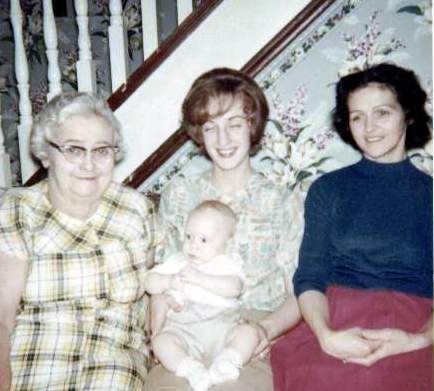
Donna with her mother, Mary Belle (Jones) Clary; her daughter, Diana (Barmes) Haas; and her eldest grandson, Darin (me), 1964.

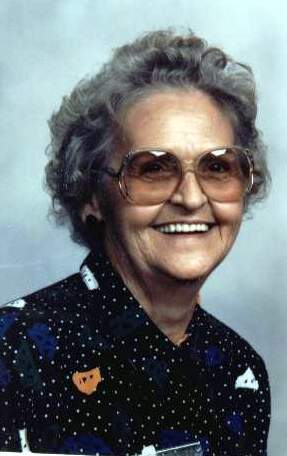
Donna, age 64, 1990

Donna Mae Clary-Barmes

May 8, 1924 – June 27, 1992

Posted in Blogroll | Leave a comment

Last TITANIC Survivor Dies

BOSTON – Lillian Gertrud Asplund, the last American survivor of the sinking of the Titanic in 1912, has died, a funeral home said Sunday. She was 99.

Asplund, who was just 5 years old, lost her father and three brothers — including a fraternal twin — when the “practically unsinkable” ship went down in the North Atlantic after hitting an iceberg.

She died Saturday at her home in Shrewsbury, said Ronald E. Johnson, vice president of the Nordgren Memorial Chapel in Worcester, Mass.

“She went to sleep peacefully,” he said.

Asplund’s mother, Selma, and another brother, Felix, who was 3, also survived the Titanic sinking in the early morning of April 15, 1912.

Asplund was the last Titanic survivor with actual memories of the sinking, but she shunned publicity and rarely spoke about the events.

At least two other survivors are living, but they were too young to have memories of the disaster. Barbara Joyce West Dainton of Truro, England, was 10 months old and Elizabeth Gladys “Millvina” Dean of Southampton, England, was 2 months old.

The Asplund family had boarded the ship in Southampton, England, as third-class passengers on their way back to Worcester from their ancestral homeland, Sweden, where they had spent several years.

Asplund’s mother described the sinking in an interview with the Worcester Telegram & Gazette newspaper shortly after she and her two children arrived in the city.

Selma Asplund said the family went to the Titanic’s upper deck after the ship struck the iceberg.
“I could see the icebergs for a great distance around … It was cold and the little ones were cuddling close to one another and trying to keep from under the feet of the many excited people … My little girl, Lillie, accompanied me, and my husband said ‘Go ahead, we will get into one of the other boats.’ He smiled as he said it.”

Because they lost all of their possessions and money, the city of Worcester held a fundraiser and a benefit concert that together brought in about $2,000 for the surviving Asplunds.

Lillian Asplund never married and worked at secretarial jobs in the Worcester area most of her life. She retired early to care for her mother, who was described as having never gotten over the tragedy.

Selma Asplund died on the 52nd anniversary of the sinking in 1964 at age 91. Felix Asplund died on March 1, 1983, at age 73.

A memorial service will be held Wednesday, Johnson said.

Posted in Blogroll | Leave a comment

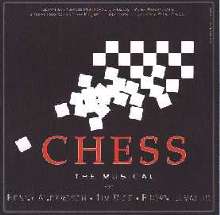
A Weekend Of CHESS

This weekend I got to see one of my favorite musicals, CHESS, on Friday and Saturday. The show was produced by the Cincinnati Music Theatre, a good community theatre, but the production was lacking in certain areas. Still, it was by no means intolerable. I saw this show in NYC, Louisville, Cincinnati Conservatory of Music, and Wright State University. When Wright State performed CHESS, the director called up lyricist Timothy Rice to work with him on his personal concept of this show which had been drastically altered between the London and NYC productions.

CHESS is a musical with lyrics by Tim Rice and music by Björn Ulvaeus and Benny Andersson, formerly of ABBA. The story involves a romantic triangle between two players in a world chess championship, and a woman who manages one and falls in love with the other. Although the protagonists were not intended to represent any specific individuals, the characters personalities are loosely based on those of Victor Korchnoi and Bobby Fischer and the oddity of the Merano championship in the musical is based on the similar oddities which occurred during the 1978 World Championship between Korchnoi and Anatoly Karpov.

Following the pattern of Jesus Christ Superstar and Evita, a concept album was recorded and released in 1984, before any stage production was underway. A single from the album, “One Night In Bangkok“, sung by Murray Head, was an unlikely top-40 hit, and the duet, “I Know Him So Well“, by Elaine Paige and Barbara Dickson, held the number one spot on the UK singles charts for 4 weeks in February 1985.

CHESS premiered in London‘s West End in 1986 and played for three years. A radically-rewritten Broadway version opened in 1988 to poor reviews and closed in just eight weeks. It is occasionally produced by regional theatrical companies, sometimes merging elements from both versions. CHESS-Baltimore, a version that opened on March 19, 2004, is based on the Broadway version.

A new version, in Swedish, premiered in Stockholm, Sweden in February 2002 and ran through June 2003.

CHESS, the British version
Act 1
The world chess championship is being held in the northern Italian town of Merano. The brash American champion relishes the crowd’s affection, while his Russian challenger and Molokov, his second (actually a KGB agent), watch with curiosity and disdain on TV. The opening ceremony features an arbiter insisting on holding the proceedings together, US and Soviet diplomats vowing their side will win, and marketers just looking to make a buck. The American storms out of a rules meeting, leaving his second, Florence, in an argument with the Arbiter and the Russians. She later scolds him, but he insists that she, a child emigre who escaped Hungary during the 1956 Hungarian Revolution, should support him. Instead, she reflects that “nobody’s on nobody’s side”. The first game of the match goes badly, with dirty tricks nearly evolving into a brawl. A meeting to smooth things over goes badly and strands the Russian and Florence together, where they quickly develop feelings for one another. As the matches continue, the American flounders and blames Florence, who leaves him. The Russian wins the championship, then defects to the west. Answering reporters’ questions about his loyalties, his “Anthem” declares that “my land’s only borders/ lie around my heart.”

Act 2
A year later, the Russian is set to defend his championship in Bangkok, Thailand. The American is already there, chatting up locals about the nightlife. Florence and the Russian are now lovers, and worry about the situation. Molokov, meanwhile, has trained a new protege to challenge the Russian. The American interviews the Russian on TV and makes obvious attempts to rattle him, even declaring that the Russian’s wife is being allowed to leave the USSR to attend the match. She and Florence both reflect on their relationships with him. The American goes to the Russian with information about Florence’s long-lost father, claiming that instead of being a hero as she believed, he was instead a collaborator. The Russian, and later Florence, dismiss him, unwilling to hear what he has to say. He reflects on his life and his obsession with chess as a way to escape an unhappy childhood. In the deciding game of the match, The Russian manages an exceptional victory, and realizes that it may be the only success he can achieve – Svetlana castigates him for wallowing in the crowd’s empty praise. Both acknowledge they are doomed to care only for themselves. Later, he and Florence reflect on their story that seemed so promising, and how they “go on pretending/ stories like ours/ have happy endings.”

CHESS, the Broadway version
Act 1
The world chess championship is being held in Bangkok. At a press conference, the brash American challenger, Freddie Trumper, relishes the crowd’s affection, while the current Russian champion, Anatoly Sergievsky, and Molokov, his second, watch with curiosity and disdain. Dur
ing the match Freddie accuses Anatoly of receiving outside help via the flavor of yogurt he is eating, and Freddie storms out, leaving his second, Florence, in an argument with the Arbiter and the Russians. She later scolds him, but he insists that she, a child emigre who escaped Hungary during the 1956 uprisings, should support him. A meeting to smooth things over goes badly and strands the Russian and Florence together, where they quickly develop feelings for one another. Freddie was supposed to attend, but got sidetracked by the night life, and arrived very late to see Anatoly and Florence holding hands. When he later accuses her of conspiring against him, she reflects that “nobody’s on nobody’s side”, and decides to leave him. As the matches continue, the American flounders, finishing Act 1 with 1 win and 5 losses; one more loss will cost him the tournament. Anatoly surprises everyone by his defection at the end of Act 1. Answering reporters’ questions about his loyalties, his “Anthem” declares that “my land’s only borders/lie around my heart.”

Act 2
Eight weeks later, everyone is in Budapest to witness the conclusion of the tournament. Florence is elated to be back in her hometown of Budapest, but dismayed that she remembers none of it, not even what happened to her Father, since he had to leave her in 1956. Molokov offers to help and starts ‘investigating’ Florence’s father’s fate. As Anatoly and Florence listen to a local Hungarian choir, he meets three friends from his hometown, which pleases Anatoly, but local CIA operatives are suspicious…why would the Soviets allow people to leave Russia just to see a friend? Even Svetlana, Anatoly’s wife, has been flown into Budapest to see her defecting husband. She wishes the best for Anatoly, and decides not to inform him that as a result of his defection, Svetlana lost their apartment, her brother was denied access to medical school, Anatoly’s own brother has also been forced to move to a smaller apartment, and back in Moscow Anatoly has been falsely accused of embezzling…all information Anatoly learns from Molokov. Molokov no longer has an ‘official’ role, and is officially in Budapest merely because of his love of chess. Unofficially, he badly wants Anatoly back and has no hesitation in exerting pressure or veiled threats. He also makes an ally in Freddie’s agent, Walter, for unknown reasons. These threats strain Anatoly’s relationship with Florence, and she shares her Anatoly-related woes with Svetlana. The threats also degrade Anatoly’s ability to play chess, so that Freddie starts winning games until they are tied 5-5…the next game will decide the match. Freddie reminisces about his childhood to a sexy female reporter, and eagerly anticipates winning the match, being totally oblivious to Anatoly’s troubles. Molokov then informs Florence that they have found her father and they can see him tonight! While she does not remember her father, and she does not recognize herself as the baby in the photo her father shows her, he still convinces her through a Hungarian lullaby. As the scene rises on the final game, Anatoly is missing, and no one sympathizes…there have been so many shenanigans in the tournament that no one wants to hear any more excuses. All are prepared to concede the match to Freddie when Anatoly wanders in and proceeds to play. He has not slept all night. During the game he realizes that despite all the family that he has brought harm to, by his defection, he cannot hurt his true love, Florence, by depriving her of her father. He chooses to recant his defection, and makes a tactical error. Freddie immediately takes advantage of the blunder and proceeds to win the game…and the tournament, becoming the new world champion. Anatoly returns to Moscow a broken man. Florence is waiting for her father so they can leave for America when she is approached by Walter. He confesses to her that the old man is not her father and her father is most likely dead. It seems that the Soviets struck a deal with Walter, a secret CIA agent, that if they managed to get Anatoly back, they would release a captured American spy. Their initial attempts at getting Anatoly back, by using Svetlana, and other family members had failed, and they had finally succeeded by using Florence. As the curtain closes, Florence has left Freddie, been lost by Anatoly, and lost the father she never had, and she realizes that her only borders lie around her heart.

For more information on this musical, please visit:
http://www.hahns.tv/Musicals/Chess/chess.htm

Posted in Blogroll | Leave a comment

Fluid Like A River

The journey of water as it flows upon the earth can be a mirror of our own paths through life. Water begins its residence on earth as it falls from the sky or melts from ice and streams down a mountain into a tributary or stream. In the same way, we come into the world and begin our lives on earth. Like a river that flows within the confines of its banks, we are born with certain defining characteristics that govern our identity. We are born in a specific time and place, within a specific family, and with certain gifts and challenges. Within these parameters, we move through life, encountering many twists, turns, and obstacles along the way just as a river flows.

Water is a great teacher that shows us how to move through the world with grace, ease, determination, and humility. When a river breaks at a waterfall, it gains energy and moves on, as we encounter our own waterfalls, we may fall hard but we always keep moving on. Water can inspire us to not become rigid with fear or cling to what’s familiar. Water is brave and does not waste time clinging to its past, but flows onward without looking back. At the same time, when there is a hole to be filled, water does not run away from it in fear of the dark; instead, water humbly and bravely fills the empty space. In the same way, we can face the dark moments of our life rather than run away from them.

Eventually, a river will empty into the sea. Water does not hold back from joining with a larger body, nor does it fear a loss of identity or control. It gracefully and humbly tumbles into the vastness by contributing its energy and merging without resistance. Each time we move beyond our individual egos to become part of something bigger, we can try our best to follow the lead of the river.

Posted in Blogroll | Leave a comment

The Gift Of Giving You

Yesterday I took Jose to the dentist, and just as they finished the second root canal – on a front tooth he had broken back in Oregon – the tooth came out all the way. He was in a good deal of pain, and the dentist decided to have a semi-permanant tooth made for the open hole… Jose spent the rest of the day on the couch in the basement, watching TV, coming up stairs to remind me he was still happy, and eating fruit slices all day.

To live harmoniously, we need to be supportive and helpful to all people, creatures, and plant life that share this earth with us. While “being of service” is part of being a good citizen of the world, it also feels good to help others. When we do something for others in service, without the expectation of anything in return, we are turning our actions into offerings.

There are many ways to be of service to our community. There are the obvious and much needed volunteer opportunities, such as serving Thanksgiving dinner at a shelter, mentoring our youth, or cleaning up a beach. Then, there is the kind of service that we may not even think of as being acts of service. Learning a new language (perhaps sign language) so that you can talk to more people is a way to reach out to others. Inviting someone who isn’t motivated enough to exercise on their own to join you on your daily walk is a way to give of yourself. Sharing flowers or vegetables from your garden, organizing a poetry reading, offering to babysit for a busy parent, or donating pet food to an animal shelter all are simple ways to offer your services to your community.

There are many ways that you can serve the world. Imagine the impact we would have on the environment if we picked up one piece of trash off the street everyday and chose not to drive our car once a week. Even gardening tactics such as throwing wildflower seeds onto a vacant lot can brighten the lives of others – including the lives of birds and insects. Everyday, you can do something to make this world a better place. During meditation, ask for guidance on what you can do to be of service. This can be a wonderful way to start your day. Smiling at a stranger who looks down in the dumps or teaching your neighborhood kids how to whistle will impact someone’s day or even their life. Giving of yourself is the best gift that you can give.

Posted in Blogroll | Leave a comment

The Gift Of Giving You

Yesterday I took Jose to the dentist, and just as they finished the second root canal – on a front tooth he had broken back in Oregon – the tooth came out all the way. He was in a good deal of pain, and the dentist decided to have a semi-permanant tooth made for the open hole… Jose spent the rest of the day on the couch in the basement, watching TV, coming up stairs to remind me he was still happy, and eating fruit slices all day.

To live harmoniously, we need to be supportive and helpful to all people, creatures, and plant life that share this earth with us. While “being of service” is part of being a good citizen of the world, it also feels good to help others. When we do something for others in service, without the expectation of anything in return, we are turning our actions into offerings.

There are many ways to be of service to our community. There are the obvious and much needed volunteer opportunities, such as serving Thanksgiving dinner at a shelter, mentoring our youth, or cleaning up a beach. Then, there is the kind of service that we may not even think of as being acts of service. Learning a new language (perhaps sign language) so that you can talk to more people is a way to reach out to others. Inviting someone who isn’t motivated enough to exercise on their own to join you on your daily walk is a way to give of yourself. Sharing flowers or vegetables from your garden, organizing a poetry reading, offering to babysit for a busy parent, or donating pet food to an animal shelter all are simple ways to offer your services to your community.

There are many ways that you can serve the world. Imagine the impact we would have on the environment if we picked up one piece of trash off the street everyday and chose not to drive our car once a week. Even gardening tactics such as throwing wildflower seeds onto a vacant lot can brighten the lives of others – including the lives of birds and insects. Everyday, you can do something to make this world a better place. During meditation, ask for guidance on what you can do to be of service. This can be a wonderful way to start your day. Smiling at a stranger who looks down in the dumps or teaching your neighborhood kids how to whistle will impact someone’s day or even their life. Giving of yourself is the best gift that you can give.

Posted in Blogroll | Leave a comment

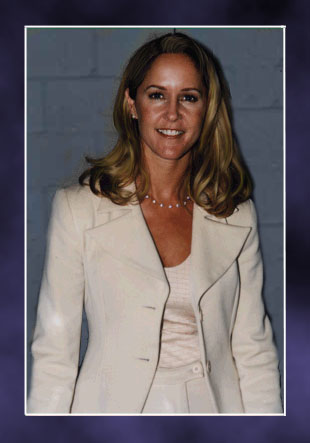
Mystery Celebs announced

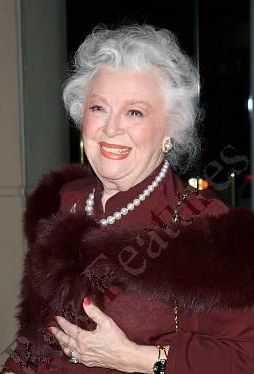
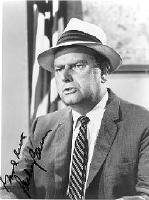
LOL! Many could get two of the four, especially the first two; however, most could not get the last two. So here they are:

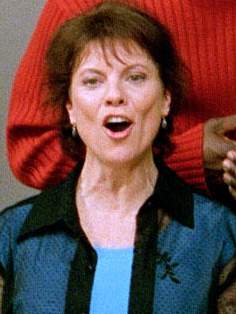
The sweetheart next door… ERIN MORAN who played Joni from HAPPY DAYS

The neighborhood terror! JAY NORTH who played Dennis in DENNIS THE MENACE!

In a movie she got a “book on her backside”
ANGELA CARTWRIGHT who played Brigitta in THE SOUND OF MUSIC

She was always playing someone’s sweetheart, and appearing as the younger sister of the most popular motion picture character.
ANN RUTHERFORD who played Andy Hardy’s (Mickey Rooney) sweetheart, and the role of Careen O’Hara, the younger sister of Scarlett O’Hara in GONE WITH THE WIND

Posted in Blogroll | Leave a comment

Another Tuesday…

I have been rather tired after this past weekend, but have managed to do a few chores around the house. I have a contractor coming to do some minor repair, fix-up things, as well as adding a ceiling/vent fan to the bathroom.

Tomorrow I take Jose to the dentist for two root canals. I will probably keep him home the remainder of the day. They are not as bad as pulling a tooth, but it is still something for which he should try to rest afterwards.

I had an Email from a former student in New York, basically asking, “What happens when you feel as though you are falling in love with someone and yet you don’t know how they feel?”

UGH! Is she asking the wrong person. That’s the story of my life! I tend to be the one who never utters a word, or shows any interest. Often times we go our own separate ways, and then I hear, a number of years later, “I had the biggest crush on you!” So, I could not provide any former mentor, or fatherly advice on that particular subject. I always tell myself that I will be brave, have courage to tell the other person how I feel, but then I am always afraid of getting shot down. I just lived through one of these particular events with someone who is also in theatre. We are both very similar in our desires to be private and somewhat reclusive, yet, I felt such a strong connection on so many levels. I always enjoyed being in this person’s presence, which for a while was almost daily, and now that we do not see one another as often, I am still slightly drawn in that direction. The right people who have come along before are always in another state, another country, or in a relationship…

The heart – or what ever it happens to be that rules these episodes in our lives – is so peculiar… I wish I could have answered my former student’s question – but I am still trying to figure out the answer for my self. And, then, your sons come to you with the same question – well, Matthew does. Jose, I am sure has no difficulty in this arena.

Maybe I should take advice from him!

Posted in Blogroll | Leave a comment

Return To River City

I got to do something this weekend that few adults probably have an opportunity to do: I performed in a high school musical with my son and a number of my private voice students. My last time to appear on stage in a high school musical was 1982, and never dreamed that I would do so again after twenty-four years.

The events began unfolding around 2:15PM Thursday afternoon when one of my private students re-ported that the student playing “Mayor Shinn” in Fairmont’s production, The Music Man, was not at dress rehearsal, and would not be doing opening night due to extenu-ating circumstances. My student said that Mr. McDonald (my friend, Brody) had Plan B and Plan C ready to go. I knew that the student teacher would be the most likely candidate. I finished my first two students and as I was waiting my 3:45PM lesson to arrive, Brody called me. After a few minutes of chat, he asked if I would consider stepping into the role. Within ten minutes, the plan for opening night was in place.

I walked over to the school at 5:00PM with a few tux and suit pieces, and Dee Friesenborg, a former parent of Fairmont students who had returned to assist with costuming, assisted me with the remainder of the costume. Brody brought over his cut-away tux coat which set the Mayor’s costume perfectly. After getting fitted with my body mic, a sound check, make-up, a blocking walk-thru with Brody, I was finally ready to look over lines at 6:15PM with a 7:30PM curtain. Thankfully, Becca Childs, the assistant choir director at the high school, assisted me in getting pages containing my lines into plastic sleeves to place into a three-ring binder, and then ran lines with me. Since I had no time, whatsoever, to devote to building a character, the lines seemed to read similar to what I would hear from one of my favorite character actors, Parley Baer, well known for playing Mayor Stoner in The Andy Griffith Show. And it seemed to work very well.

Parley Baer, Mayor Stoner from The Andy Griffith Show

Opening night ran smoothly and I must say, it was somewhat enjoyable for one who does not enjoy performing on stage any more. During one of the opening numbers, I darted to through set pieces to the edge of the stage to see Matthew singing a solo – a solo I did not know he had in the show! Since I figured I would not be going on for Friday’s show, as well as the remainder of the weekend, I went with the artistic team and some parents to Tailgators for drinks and food – staying out much later than I normally would throughout the week (or weekend for that matter).

Friday afternoon, I chatted with Brody and agreed to do the remainder of the weekend’s performances: Friday, Saturday matinee and Saturday evening. By Friday I had 3/4 of the lines memorized, and by Saturday’s shows, I was delivering about 95% without the aide of the script. Whew. Mayor Shinn did not have a ton of lines, but a fair amount which were always funny. This was only my second support-ing, character role to attempt, and I hope it came off well enough that the students, directors and par-ents were satisfied.

There were several downfalls. The student cast for the role could not complete the production, and this is his senior year. And, my son, Matthew, one of the townspeople of River City, had been working two months on the production; I come in and was receiving comments after the show, at church, at lunch after church, at the grocery store, as well as Emails and telephone calls. I understand the nature of this particular beast in performing, but it is still frustrating when you are the parent. But as one friend indicated, “But who would have ever thought you would be in the same high school production with one of your own children?”

Paul Ford, Mayor Shinn The Music Man – motion picture.

Am I glad I did it? Yes and No, but more Yes.

No = due to the above paragraph.

Yes = I was grateful I was afforded the talent and experience to assist in this last minute casting decision so that the students could carry on with their show. It also gave me an apparently to perform alongside some of my senior voice students who will be graduating. However, the best part was being with Brody, Mike Berning (conductor), Terence Kalba (choreographer) and Raymonde Rougier (accompanist), one more time. The five of us were together in 2003 for The Secret Garden, and it was perhaps, one of the most incredible high school productions with which I have ever been involved. All the stars were aligned for that show!

I am so appreciative of the fact that Brody, Mike and Terence trusted, believed in, and encouraged me to do this role. When friends/colleagues trust you with something such as this, stepping in three hours before a show, it is one of the most wonderful compliments one could be paid.

Posted in Blogroll | 2 Comments

Mystery Celebrity Solved

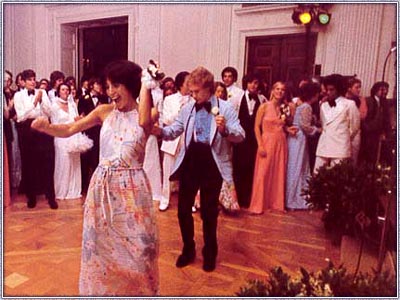
Sue Branson was once again the winner of this week’s Mystery Celebrity…

Susan Ford, the daughter of President Gerald & Betty Ford. Susan’s high school prom was held in the East Room of the White House.

Posted in Blogroll | Leave a comment

New Mystery Celebs…

OK…. I am going to make this a little harder… here are several child celebrities! Some are going back quite far!
The sweetheart next door…
The neighborhood terror!

In a movie she got a “book on her backside”

She was always playing someone’s sweetheart, and appearing as the younger sister of the most popular motion picture character.

Posted in Blogroll | 1 Comment

Trivia for MY THREE SONS (1960-1972)


At Fred MacMurray’s insistence, all episodes were filmed out of sequence during the show’s entire run using a technique now known as the MacMurray method. MacMurray would do all of his scenes in 65 nonconsecutive days. The cast regulars got haircuts once a week in order to maintain continuity. Guest stars would have to return months later to complete an episode. All kitchen scenes would be done together, then all scenes in the upstairs hallway would be filmed together, etc. This fact was well concealed until Dawn Lyn joined the cast as Dodie. Her upper front teeth grew in irregularly during the entire 1969-70 season, from being barely visible in scenes with MacMurray to being plainly visible in scenes without him. William Fawley never felt comfortable with this method of filming, having grown accustomed to filming I Love Lucy in sequence during its entire run.

The dog’s name was Tramp.

With 369 episodes over 12 years, this is the second longest-running (live action) comedy in US TV history (as of February 2003), surpassed only by “The Adventures of Ozzie & Harriet” (1952).

One of the few shows to ever survive a change in networks. At the beginning of the 1965-1966 season, the show moved from ABC to CBS, where it ran for its final seven seasons.

Not only was the first episode of the 1965-1966 season the series’ CBS debut, it also was the first episode to be shot in color. Before taking the role of Katie, Tina Cole appeared on a couple of earlier episodes in various roles.

When Tim Considine left after the 1964-1965 season, his character of Mike was written out by having him marry his girlfriend Sally and moving to Arizona to accept a teaching position.

The name of the town where the Douglasses lived before moving to California was Bryant Park. However, the state the town was in was never named.

When William Frawley left the show due to declining health, his absence was explained by having Bub move to Ireland to live.

Although officially leaving after the show’s fifth season in 1964-1965, Tim Considine’s last appearance as Mike, the eldest son, was actually in the first episode of season 6 (the series’ first in color). The episode opened with a brief scene showing Mike and Sally’s (Meredith MacRae) wedding. The episode also “launched” Barry Livingston (“Ernie”) as the new son. The characters of Mike and Sally were mentioned in the next two episodes, which dealt with Ernie’s adoption, and in a subsequent episode when Charley and the boys thought Steve was getting married. Mike was referred to by name one last time in the first 1966-1967 episode, when the gang visited Steve’s hometown. After this they were never referred to by name again for the remainder of the series, although Mike was indirectly referred to as, “the first of you” by Steve a few years later.

The character ‘Steve Douglas’ was ranked #7 in TV Guide’s list of the “50 Greatest TV Dads of All Time” (20 June 2004 issue).

Uncle Charley served in the Merchant Marines before coming to live with Steve and the boys.

Charley was Bub’s brother.

When Don Grady left the show in the final season, his absence was explained by having Robbie get transferred to Peru by his job and have Katie join him there.

The show was originally going to be named The Fred MacMurray Show, but MacMurray didn’t like the idea.

June Haver, Fred MacMurray’s real-life wife, recommended Beverly Garland for the role of Barbara.

One of the original choices for the role of Steve Douglas was Eddie Albert.

Several years later it was revealed that there were different plans in the works for the character of Robbie when Don Grady left the show. One plan was for Robbie and Katie to divorce and another plan was to have Robbie killed off.

Posted in Blogroll | 1 Comment

New Mystery Celebrity 4/28/2006

Sue Branson guessed correctly…

Clue: Born in 1945 and was a familiar personality as a teenager.
Celebrity: Lynda Bird Johnson-Robb. Linda is the daughter of President Lyndon & Lady Bird Johnson, and the wife of Virginia senator, Charles Robb. Today, Lynda is very active with the LBJ Library in Austin, and looking after her 93 year old mother, Lady (Claudia) Bird Johnson.

Today’s new mystery celebrity:

Was a fairly well-known teenager in the 1970’s whose prom location made headlines.

Posted in Blogroll | Leave a comment

Permission Slips

Taking A Field Trip

When we were children, few words were more exciting to hear than the phrase “field trip.” Field trips were a break from schoolwork and an opportunity to go on an adventure with friends. Now that we are grown ups, taking a field trip can be just as fun and memorable – if only we were willing to sign our own permission slips so we could go on one.

Allowing yourself to get stuck in your routine can make life seem boring. Adding a touch of variety to your life in the form of a field trip can break up the monotony of your days and lead you to adventure. Unlike the jaunts that were regulated by teachers or monitored by parents, taking a field trip as an adult can lead you anywhere you want. You can go on a daylong retreat or spend just a few hours at your destination. A field trip can be an opportunity to explore a new landscape or discover something about yourself. Taking a day trip to another town or visiting an unfamiliar spot in your neighborhood can be educational and fun. There is also much to be said for finding a beautiful spot under a tree where you can read a book. You can even go to one of your favorite spots and allow yourself to experience it as if you were visiting there for the first time. Going on a field trip is as much a state of mind as it is a change in the scenery.

During a “grown up” field trip, schedules, clocks, and duties are put aside so you can focus wholeheartedly on mindfully enjoying yourself. Planning a field trip can be almost as fun as going on one. A field trip is an excursion to look forward to and an experience to be savored after the fact. Wherever you decide to go and whatever you decide to do, going on a field trip can add much pleasure and excitement to your life.

Posted in Blogroll | Leave a comment

The Da Vinci Code


A few years back I read Dan Brown’s The Da Vinci Code and thoroughly loved it. I also zoomed right through several of his other books, Deception Point and Angels & Demons. Dan Brown, like another favorite author of mine, Vince Flynn, knows how to keep me attached to a book. I am always eager to begin one of their books, but am always cautious as to when I read one because I become so absorbed for two or three days. Sometimes, my friend, Kay Hetzer, will be reading a Dan Brown book and we will debate it until we are finished.

In three weeks the movie, The Da Vinci Code, will be released and it is already causing a stir with The Church. Back in the 1980’s I can remember when the church was outraged over The Last Temptation of Christ. I was in college and can remember laughing at the petition from my home church. I attended the movie with the Lutheran pastor (and his wife) where I was music director. The three of us loved it and thought the uproar was ludicrous.

Several years back it was The Passion of the Christ which garnered a good deal of press. I attended the opening day, more so out of curiosity. I walked through a little barrage of protestors who stood out on the sidewalk singing “Amazing Grace” with their hands waving over their heads. Some other movie attendees stopped to share with them but continued on.

Inside, I was surprised to find the movie theatre practically full and it seemed most of the audience was filled with Pentecostal church groups. There seemed to be large blocks of people. I was even more eager to gauge the audience reaction. I was prepared for people getting up and walking out, or booing the screen – and I was sorely disappointed. People stayed. No one booed or hissed. In fact, this audience was caught up in the movie and reacted as though they were actually standing along the “Via Dolorosa” or at the foot of Golgatha. They were wailing and sniffling as loud as the actors on the screen during emotional moments. For a movie that attracted such criticism, I was observing something completely different than what I anticipated.

After the movie, I excused myself around women holding one another and crying bitterly as though CNN just broke the news of Jesus’ death. In the lobby there were even more crowds for the next viewing. Outside, the protestors had disbanded and the local news cameras were there to interview the audience.

For both movies, I found them to be nothing more than a product of the performing arts. They did not move me nearly as much as The Ten Commandments does every Spring when it dominates five hours of channel 22, but I still appreciated their value.

I am finding this uproar over The Da Vinci Code to be almost comical. I have read a ton of articles which are incredibly anti Dan Brown, and most of the authors have not even read his work. They are basing their rebuttals against something they have not even read. Last night, I stayed up until 2:00AM reading The Jesus Papers by Michael Baigent. I am not saying I buy into all he says, but I do appreciate his research and his thorough study of the topic.

I have always felt that if a piece of work, whether it be literary or dramatic, shakes one’s faith so greatly, perhaps their faith was not as strong as it could have been. Artists, musicians, dramatists and novelists have been creating works about The Bible, Christ and the other many individuals throughout Biblical history for centuries.

No one protests paintings of Christ with golden hair or fair skin… most nativity scenes are placed in an angular Bavarian structure rather than a cave… most nativity scenes have both shepherds and wise men present when the texts indicate other wise…

The Da Vinci Code presents a not so new approach to the continuity of Christ’s bloodline, marrying him to Mary Magdalene. Many Christians are slamming Dan Brown for creating such a story, yet this concept has been around for centuries. Dan Brown simply used this piece of history to tell a story much like I did the life of the Wright brothers to tell a story. I, too, used some artistic license, but I have the satisfaction of knowing that my characters are thoroughly documented in both print, oral and photography. Neither Dan Brown, nor The Church, can claim access to as much thorough, factual documentation as I can. Dan Brown’s work does not challenge “faith.” What it does do is bring together documented historical items, placing them in a mystery/suspense novel that makes for excellent reading.

Dan Brown has done nothing wrong. This verbal crucifixion of Dan Brown reminds me of the early days of the Christian church when bishops were executed (by the church and not the Romans) for adding their own interpretation. I have listened to many ministers throughout my life and I have never heard two who are exactly alike. No one throws stones at these particular authorities who will often slant things a little differently to get a point across.

The funny thing is that Dan Brown is still under fire when it is the movie being released. Why aren’t people taking Ron Howard or Tom Hanks to task? Now, it is their interpretation based on Dan Brown’s work. It does seem to me, however, that The Church is in a panic over the release of this movie. What is there to defend? Why is it so anxious? If all the Biblical facts are cemented in truth and thorough documentation, why not allow the movie to premiere in theatres and let it blow over like others have done? The funny thing to me is that The Church, when it protests such things, is a great marketing tool for the movies! The Church draws so much attention to the upcoming premiere that it makes people more curious and interested! Again I am reading articles by theologians and clergy with a “shoot to kill” attitude. It amazes me how the political police of the Catholic Church can fight someone like Dan Brown, tooth and nail, over historical items recorded over hundreds of years, yet, for many years, hid under the carpet the allegations from parishioners of the numerous priests sexually molesting alter boys or other members.

I would like to research the making of the motion picture, The Ten Commandments that evolved from a highly embellished script. I want to know if Cecil B. DeMille was criticized as much as Dan Brown.

I found this section of Dan Brown’s webpage to be of particular interest. You can find it at the following link, but I am also including the “Common Questions” and his response. http://www.danbrown.com/novels/davinci_code/faqs.html

HOW MUCH OF THIS NOVEL IS TRUE?
The Da Vinci Code
is a novel and therefore a work of fiction. While the book’s characters and their actions are obviously not real, the artwork, architecture, documents, and secret rituals depicted in this novel all exist (for example, Leonardo Da Vinci’s paintings, the Gnostic Gospels, Hieros Gamos, etc.). These real elements are interpreted and debated by fictional characters. While it is my belief that some of the theories discussed by these characters may have merit, each individual reader must explore these characters’ viewpoints and come to his or her own interpretations. My hope in writing this novel was that the story would serve as a catalyst and a springboard for people to discuss the important topics of faith, religion, and history.

BUT DOESN’T THE NOVEL’S “FACT” PAGE CLAIM THAT EVER
Y SINGLE WORD IN THIS NOVEL IS HISTORICAL FACT?
If you read the “FACT” page, you will see it clearly states that the documents, rituals, organization, artwork, and architecture in the novel all exist. The “FACT” page makes no statement whatsoever about any of the ancient theories discussed by fictional characters. Interpreting those ideas is left to the reader.

IS THIS BOOK ANTI-CHRISTIAN?
No. This book is not anti-anything. It’s a novel. I wrote this story in an effort to explore certain aspects of Christian history that interest me. The vast majority of devout Christians understand this fact and consider The Da Vinci Code an entertaining story that promotes spiritual discussion and debate. Even so, a small but vocal group of individuals has proclaimed the story dangerous, heretical, and anti-Christian. While I regret having offended those individuals, I should mention that priests, nuns, and clergy contact me all the time to thank me for writing the novel. Many church officials are celebrating The Da Vinci Code because it has sparked renewed interest in important topics of faith and Christian history. It is important to remember that a reader does not have to agree with every word in the novel to use the book as a positive catalyst for introspection and exploration of our faith.

WHAT DO YOU THINK OF CLERICAL SCHOLARS ATTEMPTING TO “DISPROVE” THE DA VINCI CODE?
The dialogue is wonderful. These authors and I obviously disagree, but the debate that is being generated is a positive powerful force. The more vigorously we debate these topics, the better our understanding of our own spirituality. Controversy and dialogue are healthy for religion as a whole. Religion has only one true enemy–apathy–and passionate debate is a superb antidote.

PARTS OF THE DA VINCI CODE DESCRIBE THE ACTIVITIES OF THE RELIGIOUS GROUP OPUS DEI. HOW DOES OPUS DEI FEEL ABOUT YOUR NOVEL?
I worked very hard to create a fair and balanced depiction of Opus Dei. Even so, there may be those who are offended by the portrayal. While Opus Dei is a very positive force in the lives of many people, for others, affiliation with Opus Dei has been a profoundly negative experience. Their portrayal in the novel is based on numerous books written about Opus Dei as well as on my own personal interviews with current and former members.

SOME OF THE HISTORY IN THIS NOVEL CONTRADICTS WHAT I LEARNED IN SCHOOL. WHAT SHOULD I BELIEVE?
Since the beginning of recorded time, history has been written by the “winners” (those societies and belief systems that conquered and survived). Despite an obvious bias in this accounting method, we still measure the “historical accuracy” of a given concept by examining how well it concurs with our existing historical record. Many historians now believe (as do I) that in gauging the historical accuracy of a given concept, we should first ask ourselves a far deeper question: How historically accurate is history itself?

ARE YOU A CHRISTIAN?
Yes. Interestingly, if you ask three people what it means to be Christian, you will get three different answers. Some feel being baptized is sufficient. Others feel you must accept the Bible as absolute historical fact. Still others require a belief that all those who do not accept Christ as their personal savior are doomed to hell. Faith is a continuum, and we each fall on that line where we may. By attempting to rigidly classify ethereal concepts like faith, we end up debating semantics to the point where we entirely miss the obvious–that is, that we are all trying to decipher life’s big mysteries, and we’re each following our own paths of enlightenment. I consider myself a student of many religions. The more I learn, the more questions I have. For me, the spiritual quest will be a life-long work in progress.

THE TOPIC OF THIS NOVEL MIGHT BE CONSIDERED CONTROVERSIAL. DO YOU FEAR REPERCUSSIONS?
I can’t imagine why. The ideas in this novel have been around for centuries; they are not my own. Admittedly, this may be the first time these ideas have been written about within the context of a popular thriller, but the information is anything but new. My hope for The Da Vinci Code was, in addition to entertaining people, that it might serve as an open door for readers to begin their own explorations and rekindle their interest in topics of faith.

HOW DO ALBINOS FEEL ABOUT YOUR CHARACTER SILAS?
Some readers with albinism have been troubled by this character. I am very sensitive to their concerns. It is important to remember that Silas’s skin color has nothing to do with his violent nature–he is driven to violence by others’ cruelty… not by anything inherent in his physiology. The vast majority of critics and readers (even some with albinism) find Silas to be the novel’s most sympathetic character. I truly believe the novel’s portrayal of Silas is a compassionate exploration of how difficult albinism can be–especially for young people–and how cruelly societies can ostracize those of us who look different.

HAS ANYONE IN ORGANIZED RELIGION COME OUT IN SUPPORT OF YOUR NOVEL?
Yes, many people in organized religion have come out in support of this novel, and, of course, many have come out in opposition as well. The opposition generally comes from the strictest Christian thinkers who feel the idea of a “married Jesus” serves to undermine His divinity. While I don’t agree with this interpretation, this is immaterial because the dialogue itself is a deeply empowering and positive force for everyone involved. Suddenly, enormous numbers of people are passionately debating important philosophical topics, and regardless of the personal conclusions that each of us draws, the debate can only help to strengthen our understanding of our own faith. Much of the positive response I get from within organized religion comes from nuns (who write to thank me for pointing out that they have sacrificed their entire lives to the Church and are still considered “unfit” to serve behind the altar). I have also heard from hundreds of enthusiastic priests. While many of them disagree with some of the ideas in the novel, they are thrilled that their parishioners are eager to discuss religion. Father John Sewell of St. John’s Episcopal Church in Memphis stated it particularly eloquently in the press recently, saying: “This [novel] is not a threat. This is an opportunity. We are called to creatively engage the culture and this is what I want to do. I think Dan Brown has done me a favor. He’s letting me talk about things that matter.”

ARE YOU SURPRISED BY THE BOOK’S SUCCESS?
Stunned. I worked very hard on this novel, and I certainly expected people would enjoy it, but I never imagined so many people would be enjoying it this much. I wrote this book essentially as a group of fictional characters exploring ideas that I found personally intriguing. These same themes obviously resonate with a great many people.

THIS NOVEL IS VERY EMPOWERING TO WOMEN. CAN YOU COMMENT?
Two thousand years ago, we lived in a world of Gods and Goddesses. Today, we live in a world solely of Gods. Women in most cultures have been stripped of their spiritual power. The novel touches on questions of how and why this shift occurred and on what lessons we might learn from it regarding our future.

THE COVER OF YOUR BOOK MENTIONS “THE GREATEST CONSPIRACY OF THE PAST 2000 YEARS.” WHAT IS THIS CONSPIRACY?
Revealing that secret would rob readers of all the fun, but
I will say that it relates to one of the most famous histories of all time a legend familiar to all of us. Rumors of this conspiracy have been whispered for centuries in countless languages, including the languages of art, music, and literature. Some of the most dramatic evidence can be found in the paintings of Leonardo Da Vinci, which seem to overflow with mystifying symbolism, anomalies, and codes. Art historians agree that Da Vinci’s paintings contain hidden levels of meaning that go well beneath the surface of the paint. Many scholars believe his work intentionally provides clues to a powerful secret a secret that remains protected to this day by a clandestine brotherhood of which Da Vinci was a member.

WHERE DID YOU GET THE IDEA FOR THE DA VINCI CODE?
This particular story kept knocking on my door until I answered. I first learned of the mysteries hidden in Da Vinci’s paintings while I was studying art history at the University of Seville in Spain. Years later, while researching Angels & Demons and the Vatican Secret Archives, I encountered the Da Vinci enigma yet again. I arranged a trip to the Louvre Museum where I was fortunate enough to view the originals of some of Da Vinci’s most famous works as well as discuss them with an art historian who helped me better understand the mystery behind their surprising anomalies. From then on, I was captivated. I spent a year doing research before writing The Da Vinci Code.

HOW DID YOU GET ALL THE INSIDE INFORMATION FOR THIS BOOK?
Most of the information is not as “inside” as it seems. The secret described in the novel has been chronicled for centuries, so there are thousands of sources to draw from. In addition, I was surprised how eager historians were to share their expertise with me. One academic told me her enthusiasm for The Da Vinci Code was based in part on her hope that “this ancient mystery would be unveiled to a wider audience.”

YOU SEEM TO HAVE A FASCINATION WITH SECRET SOCIETIES? CAN YOU COMMENT?
My interest in secret societies is the product of many experiences, some I can discuss, others I cannot. Certainly my research of organizations like NSA, the Vatican, NRO, and Opus Dei continues to fuel my intrigue. At a more fundamental level, though, my interest sparks from growing up in New England, surrounded by the clandestine clubs of Ivy League universities, the Masonic lodges of our Founding Fathers, and the hidden hallways of early government power. New England has a long tradition of elite private clubs, fraternities, and secrecy. On that theme, the next Robert Langdon novel (already in progress) is set deep within the oldest fraternity in history the enigmatic brotherhood of the Masons.

WOULD YOU CONSIDER YOURSELF A CONSPIRACY THEORIST?
Hardly. In fact, I’m quite the opposite–more of a skeptic. I see no truth whatsoever in stories of extraterrestrial visitors, crop circles, the Bermuda Triangle, or many of the other “mysteries” that permeate pop culture. However, the secret behind The Da Vinci Code was too well documented and significant for me to dismiss.

CAN YOU SYNOPSIZE THE PLOT FOR US?
Sure. A renowned Harvard symbologist is summoned to the Louvre Museum to examine a series of cryptic symbols relating to Da Vinci’s artwork. In decrypting the code, he uncovers the key to one of the greatest mysteries of all time and he becomes a hunted man.

Posted in Blogroll | Leave a comment

THE MUSIC MAN @ Fairmont HS

This weekend is Fairmont High School’s production of Meredith Wilson’s THE MUSIC MAN. The shows are Thursday, Friday and Saturday at 7:30PM, and Saturday at 2:00PM. Once again, Terence Kalba is back at the reins as choreographer and his work is always thrilling.

Here are some photos from the rehearsals:


For more photos of rehearsals, please visit:
http://profiles.yahoo.com/dljh_dayton

Posted in Blogroll | Leave a comment

New Mystery Celebrity

Chris Stevens guessed last week’s Mystery Celebrity correct:
I am always curious to know what has happened to celebrities when they are no longer in the lime light.

Can anyone guess who this lady is?

Clue: she was born June 17, 1964.

ERIN MURPHY who played “Tabitha” on BEWITCHED.

This week’s mystery celebrity…

Born in 1945 and was a familiar personality as a teenager.

Posted in Blogroll | 2 Comments

MANHUNT


I just read this great book! Highly recommended! Today is the last full day, 141 years ago, when John Wilkes Booth lived his last.

In his book, “Manhunt,” James L. Swanson recounts in detail how Union soldiers and detectives chased John Wilkes Booth.

Abraham Lincoln’s assassination set off one of the greatest manhunts in American history. For 12 days, Union soldiers and detectives chased John Wilkes Booth through the streets of Washington, D.C., across the swamps of Maryland, and into the forests of Virginia. In his book, “Manhunt,” James L. Swanson, uses rare archival materials, obscure trial transcripts, and Lincoln’s own blood relics, to give a gripping hour-by-hour account told through the eyes of the hunted and the hunters. Booth is at the center of this tale. A Confederate sympathizer and a member of a celebrated acting family, he threw away his fame and wealth for a chance to avenge the South’s defeat. Swanson was invited on “Today” to talk about his book.

Read an excerpt:

Chapter One”I Had This Strange Dream Again Last Night”

John Wilkes Booth awoke Good Friday morning, April 14, 1865, hungover and depressed. The Confederacy was dead. His cause was lost and his dreams of glory over. He did not know that this day, after enduring more than a week of bad news and bitter disappointments, he would enjoy a stunning reversal of fortune. No, all he knew this morning when he crawled out of bed in room 228 at the National Hotel, one of Washington’s finest and naturally his favorite, was that he could not stand another day of Union victory celebrations.

Booth assumed that April 14 would unfold as the latest in a blur of eleven bad days that began on April 3 when Richmond, the Confederacy’s citadel, fell to the Union. The very next day the tyrant, Abraham Lincoln, visited his captive prize and had the audacity to sit behind the desk occupied by the first and last president of the Confederate States of America, Jefferson Davis. Then, on April 9, at Appomattox Court House, Robert E. Lee and his glorious Army of Northern Virginia surrendered. Two days later Lincoln made a speech proposing to give blacks the right to vote, and last night, April 13, all of Washington celebrated with a grand illumination of the city. And today, in Charleston harbor, the Union planned to stage a gala celebration to mark the retaking of Fort Sumter, where the war began four years ago. These past eleven days had been the worst of Booth’s young life.

He was the son of the legendary actor and tragedian Junius Brutus Booth, and brother to Edwin Booth, one of the finest actors of his generation. Twenty-six years old, impossibly vain, preening, emotionally flamboyant, possessed of raw talent and splendid élan, and a star member of this celebrated theatrical family — the Barrymores of their day — John Wilkes Booth was willing to throw away fame, wealth, and promise for his cause. Handsome and charismatic, he was instantly recognizable to thousands of fans in both the North and the South. His physical beauty astonished all who beheld it. A fellow actor once described him: “Picture to yourself Adonis, with high forehead, sweeping black hair, a figure of perfect youthful proportions and the most wonderful black eyes in the world. Such was John Wilkes Booth. At all times his eyes were his striking features but when his emotions were aroused they were like living jewels.” Booth’s passions included fine clothing, delectable women, and the romance of lost causes.

Booth’s day began in the dining room of the National, where he was seen eating breakfast with Miss Carrie Bean. Nothing unusual about that — Booth, a voluptuous connoisseur of young women, never had trouble finding female company. Around noon he walked over to Ford’s Theatre on Tenth Street between E and F, a block above Pennsylvania Avenue, to pick up his mail. Accepting correspondence on behalf of itinerant actors was a customary privilege Ford’s offered to friends of the house. Earlier that morning Henry Clay Ford, one of the three brothers who ran the theatre, ate breakfast and then walked to the big marble post office at Seventh and F and picked up the mail. There was a letter for Booth.

That morning another letter arrived at the theatre. There had been no time to mail it, so its sender, Mary Lincoln, used the president’s messenger to bypass the post office and hand-deliver it. The Fords did not even have to read the note to know the good news it contained. The mere arrival of the White House messenger told them that the president was coming tonight! It was a coup against their chief rival, Grover’s Theatre, which was offering a more exciting entertainment: Aladdin! Or His Wonderful Lamp. Master Tad Lincoln and chaperone would represent the family there. The letter, once opened, announced even greater news. Yes, the president and Mrs. Lincoln would attend this evening’s performance of Tom Taylor’s popular if tired comedy Our American Cousin. But the big news was that General Ulysses S. Grant was coming with them. The Lincolns’ timing delighted the Fords. Good Friday was traditionally a slow night, and news that not only the president — after four years a familiar sight to Washingtonians — but also General Grant, a rare visitor to town and fresh from his victory at Appomattox, would attend, was sure to spur ticket sales. This would please Laura Keene, who was making her one thousandth performance in the play; tonight’s show was a customary “benefit,” awarding her a rich share of the proceeds. The Lincolns had given the Fords the courtesy of notification early enough in the day for the brothers to promote their appearance and to decorate and join together the two boxes — seven and eight — that, by removal of a simple partition, formed the president’s box.

By the time Booth arrived at Ford’s, the president’s messenger had come and gone. Sometime between noon and 12:30 p.m. as he sat outside on the top step in front of the main entrance to Ford’s reading his letter, Booth heard the galvanizing news. In just eight hours the subject of all of his brooding, hating, and plotting would stand on the very stone steps where he now sat. This was the catalyst Booth needed to prompt him to action. Here. Of all places, Lincoln was coming here. Booth knew the layout of Ford’s intimately: the exact spot on Tenth Street where Lincoln would step out of his carriage; the place the president sat every time he came to the theatre; the route through the theatre that Lincoln would walk and the staircase he would ascend to the box; the dark, subterranean passageway beneath the stage; the narrow hallway behind the stage that led to the back door that opened to Baptist Alley; and how the president’s box hung directly above the stage. Booth had played here before, most recently in a March 18 performance as Pescara in The Apostate.

Posted in Blogroll | Leave a comment

Mystery Celebrity

I am always curious to know what has happened to celebrities when they are no longer in the lime light.

Can anyone guess who this lady is?

Clue: she was born June 17, 1964.

Posted in Blogroll | Leave a comment