
This evening, I went downtown to watch FINDING KING RICHARD at The Neon Movies and was reminded that it is important for researchers to protect their work so others do not claim victory.
When I was in junior high school, I began practicing for the day I could audition for drum major of the high school’s marching band. My mother cautioned me to not mention my dream to anyone. Mother was fearful that some might deride me, thus forcing me to abandon the goal. The only person who knew was the nationally known twirler and our marching band choreographer, Tudy Smith.
At age three, I suffered rheumatic fever, just as my maternal grandfather had while at the Army-Air-corps camp where he hoped to be a radio operator. Grandpa’s bout with the fever caused him lifelong hearing loss and heart issues. Mine caused me to go completely deaf in my right ear. The school corporation believed I should be entered into special education because I was considered legally deaf. Mother, along with our family physician, Dr. Walter Wirth devised a fake hearing examination so that I would be approved for mainstream education.
As I grew older and it became obvious that I was aiming for a music career, Mother stressed the need to remain silent about my hearing loss. Only my mother, my father, my maternal grandparents, and Dr. Wirth knew of my hearing loss. Finally, in my thirties, I began sharing the story with others.
There were two assignments in high school where, again, Mother stressed the need to not share research information. In my freshman year of high school, a Latin class assignment was to write a celebrity to ask if they had studied Latin and if so, how did it impact them. I selected the newly married Princess Diana and added Johnny Carson as a backup. Both responded positively and shared their appreciation for having studied Latin.
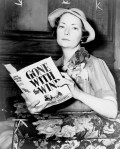
The second assignment was for my senior advanced composition research paper. I elected to research the writing of Margaret Mitchell, the deceased author of GONE WITH THE WIND (1936). Ms. Mitchell’s older brother and executor of her estate agreed to meet me for an interview. Over Christmas break, in 1982, my partner, Rick, and I drove down to Atlanta, Georgia to meet with Mr. Stephens Mitchell. During
Again, Mother wanted to be certain that I would not be dissuaded by others if I shared my project missions. It worked.
With several historical projects that have required substantial research, I have uncovered several mysteries about the Wright Brothers, one on President Lincoln, and a few more on other topics. I have been sitting on some of these finds for twenty-plus years and refuse to divulge my research data until I am assured no other hands will break the lock of secrecy.
Ironically, Bishop Milton Wright, father of Wilbur and Orville, stressed “secrecy” to his children, especially the two aviators who were leading the way in the early 1900s race for the sky. While their secrecy allowed them the leading spot in this race, it also created some barriers to the advancement of aviation in its infancy.
As I watched FINDING KING RICHARD, my heart ached for Philippa Langley, portrayed brilliantly by actress, Sally Hawkins, as she triumphed in locating the mysterious grave of England’s King Richard III only to be shoved aside by those with more prestige and power. They robbed her of her meticulous research, time, and hard work.
The movie served as a reminder that I must maintain my own privacy with my works in progress.



 The Haasienda on Shroyer...