

I can remember eagerly awaiting the premiere of the new sitcom, Will & Grace. I liked the show right off, but Jack and Karen were my least favorite characters. I figured they would be written out before long as they did not seem to fit to me. Karen seemed to serve no major purpose, and Jack was far too flamboyant for my taste.
 Before long, Karen was my favorite. Grace, played by Debra Messing, also became a favorite as she reminded me so much of Lucille Ball – especially with her success in physical comedy. But Karen! Megan Mullaly, whom I had seen on Broadway in Grease and How To Succeed In Business Without Even Trying, had a slight character adjustment from the semi-practical rich lady to the alcohol/drug abusing hit. I had several friends from college say, “You know, your sense of humor is so much like Karen Walker’s on Will & Grace.” I do not think myself as rude as Karen, but perhaps the wit. My friend, Debbie and I always called ourselves Karen and Jack – however, I was probably more like Will, as Jack has always been way over the top.
I will certainly miss the laughs, but thanks to my sister, I have several seasons on DVD! And at 11:00am on the WB station, the reruns continue each week day morning!
Reviews form WILL & GRACES’s final episode

Where there’s a Will, there’s a Grace. Until Thursday night, anyway, when their platonic love affair comes to an end.
The award-winning NBC sitcom Will & Grace is throwing itself a two-hour going-away party this week after eight seasons of gaiety, which, while not always groundbreaking, were always loaded with racy double entendres and sharp zingers.
While the series was lauded by GLAAD and publications like The Advocate for prominently featuring not just one, but two, out-and-proud main characters and accurately representing the gay community, Will & Grace mainly stuck to the formula–make ’em laugh.
Because it was a comedy–a pretty raunchy one at that, and it got even more so as the years went by–the show didn’t tackle too many polarizing issues besides ones that apparently are socially acceptable to make jokes about, such as infidelity, single motherhood and death.
But it did also address gay parenting, homophobia and what it’s like to be a member of a minority (if you’ve got oodles of money or rich friends) and in doing that became a groundbreaker.
The poignancy of Will & Grace when it began in 1998 (although it slowly oozed out of the series as the guest stars and cheaper laughs started pouring in) was that the two main male characters who were gay were far more comfortable in their own skin than the straight female lead could ever hope to be.
Sure, it doesn’t seem that risque but the openness of Eric McCormack’s Will and his best friend, Jack (Sean Hayes), may have been surprising to some viewers in the show’s early days. A gay man not trying to hide his sexual preference from someone? What?!
“Eight years ago, a show with two gay guys would have seemed niche,” McCormack told the Associated Press. “The opposite’s happened. Kids watch it, old women watch it. Everyone wanted to know when Will was getting a boyfriend.” (Not quite everyone–after losing its Friends in 2004, the show lost more than 50 percent of its viewership, which topped 17 million a few years ago. Season eight averaged 7.8 million viewers a week.)
And there lies the show’s cultural significance that led GLAAD President Neil Giuliano to issue this statement upon the series’ demise:
“Will & Grace has given unprecedented visibility to gay, lesbian and bisexual people. This is a comedy that created an emotional connection between millions of viewers and its characters. Audiences laughed along with characters like Will and Jack, and a door opened for viewers to have a greater understanding of our lives. For many years to come, Will & Grace will continue to open hearts and minds as it lives on in syndication.”
Its further cultural significance, of course, was that the show won 12 Emmys, including one for Best Comedy and acting honors for McCormack, Debra Messing, Hayes and Megan Mullally.
Meanwhile, the series’ title may have been Will & Grace, but it was Hayes’ narcissistic struggling actor Jack McFarland and Mullally’s pill-popping socialite Karen Walker who sashayed and squeaked into viewers’ hearts.
Both supporting players won an Emmy, a Golden Globe and multiple SAG Awards for their roles as the voices of mad reason behind Will and Grace’s zany codependency.
A line from the series finale says it all:
Karen to Jack: “Do you find them exhausting?”
Jack: “I always have.”
After a one-hour retrospective at 8 p.m. Thursday, the season finale presumably will see that the characters are happy as they head into the annals of television.
“I can tell you that it’s funny and, as in the pilot, the episode is about the characters Will and Grace, with the characters of Jack and Karen there to support the Will and Grace story–which I think is the way to end the show,” Hayes said diplomatically, when Tribune Media Services asked him for hints about the show’s send-off. “Jack and Karen don’t need these incredible loose ends to be tied up, although we’ll give the fans some kind of closure for them as well.”
One can assume that the return of Harry Connick Jr. as Leo means Grace will tell her ex he’s the father of her baby and they’ll ride off into the sunset together. Will is about ready to set up house with boyfriend Vince (Bobby Cannavale, who won an Emmy for guest-acting on the show), so perhaps he’ll be able to stop acting mortally wounded whenever Grace experiences an instant of happiness. (Of course, the exact same thing can be said about her.)
As for Jack and Karen, well, put them anywhere with martinis in hand and people to make fun of and they’ll be just fine.
Mullally, 47, is set to host her own syndicated talk show in the fall, but the end of Will & Grace was enough to make even Karen shed a boozy tear.
“There were a lot of snotty, tearful faces all around the set,” Mullally told People recently. “When we got to the very, very last scene, everybody was just a mess. We started sobbing and hugging each other. That was it.”
McCormack, 43, who has starred in The Music Man on Broadway, is currently in New York rehearsing for his lead role in the dark-comedy play Some Girls, which opens June 8.
“My saddest moment was the last time I stood in Will’s kitchen,” he told People. “That was the most colorful position for me, standing there and stirring something. It was my pulpit, the place where I delivered my best jokes. Deb and Megan and Sean I can see again, but not my kitchen.”
Hayes, 35, has a few projects in the works at Hazy Mills Productions, the company he runs with busin
ess partner Tom Milliner.
“As sad as I am to leave, to not be able to see these people every day, I’m looking forward to other experiences in life that I haven’t had the opportunity to seek out yet,” Hayes said.
Messing may have gotten her fill of playing a pregnant woman this season, but she can’t wait to spend more time with her two-year-old son, Roman, now that she doesn’t have to say Grace every day. “Since the show wrapped, I’ve been able to just relax with him and go to Gymboree,” she told People.
In the end, no matter how many boundaries the show did or didn’t cross, there’s no arguing that Will, Grace, Jack and Karen were masters of both the one-liner and at taking care of each other.
“I think the humor of the program got people there and I think the relationship got people to stay,” the show’s cocreator, Max Mutchnik, told the AP. “In the case of Will & Grace it’s about friendship. Everybody wants that kind of relationship in their lives. Gay, straight, black or white–that’s second to it.”
…another review…
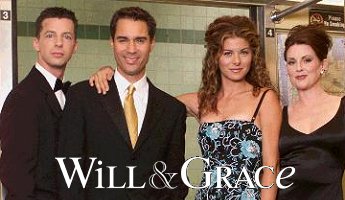
NEW YORK – It was a funny & satisfying conclusion for Will & Grace Thursday as the NBC sitcom ended its eight-season run by looking ahead more than 20 years.
“You know what’s funny? We haven’t changed a bit,” said a slightly grayer Will (Eric McCormack) to Grace (Debra Messing) and their pals Karen (Megan Mullally) and Jack (Sean Hayes), as they toasted themselves in a neighborhood Manhattan bar.
Go no further if you don’t want to know the details.
Bottom line: The gay guy and straight girl who were so much in love successfully navigated their incompatibilities, ending up bonded by marriage after all: Will’s son to Grace’s daughter.
At the start of the hour-long finale, Will (in the present) was making good on his pledge to care for pregnant Grace. He planned to help her raise the child.
But then Leo (Harry Connick, Jr.), Grace’s ex-husband, unexpectedly arrived from Rome to say he wanted her back — finding, much to his surprise, that she was pregnant with his child.
Flash forward two years: Grace and Leo and their little daughter, Lila, were together and happy.
Will and his partner, Vince (Bobby Cannavale), were together with Ben, their little boy.
But Will and Grace hadn’t spoken in two years. They were angry, feeling that somehow each had deserted the other.
Karen and Jack (as they shared a bubble bath and conversed on cell phones) fretted about this estrangement.
“Sometimes it seems like our sole purpose in life is just to serve Will and Grace,” Karen declared.
“Right,” Jack agreed indignantly. “It’s like all people see when they look at us are the supporting players on `The Will and Grace Show.'”
They plotted to bring the unsuspecting former best friends back together. The plan worked.
“I am so sorry I hurt you, Will,” Grace said. “But I’d be lying if I said I regret what happened. And I don’t think you do either.”
“God, you’re right,” said Will. “Grace, I don’t want to fight with you anymore.”
But despite their having made up, their lives — and respective families — took them on separate paths.
Then, some 18 years further into the future, college students Ben and Lila were moving into dorm rooms across the hall from one another. They met. Sparks flew. Their parents Will and Grace were reunited once more.
“I still can’t believe our kids are getting married,” Will told Grace as they chatted on the phone while they each watched TV, just as they did from the first episode of “Will & Grace” in 1998.
And what of Karen, the boozy, rich Manhattan diva, and Jack, her outrageously gay buddy?
We see them, also 20 years in the future, contentedly living together in luxury.
“Isn’t it funny how we’ve been with each other longer than we’ve been with any of our husbands or boyfriends?” chirped Karen. What’s more, Jack and Karen were caring for — and still trading barbs with — Rosario (Shelley Morrison), Karen’s wisecracking maid.
A sitcom about a gay man and a straight woman linked in every way but physically was a radical idea when Will & Grace premiered. But it quickly caught on and built into a hit, with nearly 200 episodes.
At its peak in the 2001-02 season the series drew an audience of more than 17 million, though its popularity tapered off in recent years (this season it has averaged 7.8 million viewers).
But even at the end, the characters were true to themselves, the affection between this Fab Four was palpable, and the banter remained razor-sharp.
On the phone, Will voiced his doubts about the dress Grace planned to wear to their kids’ nuptials.
“I’m not crazy about the trim,” he said.
“Will,” she shot back, “you never were.”
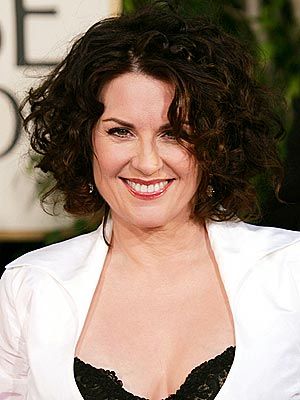
Thanks, Karen ~ for the memories…
and all the laughter…

 The Haasienda on Shroyer...